Superman vs Fantastic Four: First Steps - Same but not similar

It's been a while.

Recently I decided to watch two superhero movies on the same day; the most recent adaptations of among the oldest running American comic book superhero IPs.

By this point these characters have been interpreted on the big screen numerous times already to varying degrees of success, so I didn't expect the world. I just wanted a fun outing at the movies.

I started the day with James Gunn's Superman, followed by lunch and then the Fantastic Four. I was a little surprised with how both movies decided to eschew the titular characters' origin stories, correctly assuming that following multiple prior adaptations, a majority of the audience are not so keen on sitting through another hour of parents or uncles getting gunned down. These Superman and Fantastic Four, while still green, are already established protectors of their home cities and have endeared themselves to the citizens with their heroics.

On top of this, the heroes are also immediately shown to have had contact with some of the other characters from their comic book history, if not their most famous arch nemeses. Superman for example receive the assistance of Green Lantern, Hawkgirl, and Mr. Terrific when contending with a particularly troublesome enemy, while Marvel's First Family, having been around as a unit for one year already at the start of the movie, is revealed to have successfully pacified the threat of the Moloids. 

The two movies also embrace the silliness of the medium of their origin, never ultimately taking themselves too seriously. Eager to shed the sombre reputation cultivated by the previous adaptation by Zack Synder, Gunn's Metropolis is colourful, wacky, irreverent even. Robot assistants in the Fortress of Solitude, fringe characters you've probably never heard of before, and pocket universes are just a tenth of Gun's madcap DCEU. Fun fact: both movies feature a black hole.  

But ultimately, only one movie did a good job of entertaining me, and that is the Fantastic Four. 

Superman is such an unfocused mess to me, with its 387 characters showing up rather needlessly, as well as its scattered plot. One minute they're on the invasion of one made-up nation by another fake country, the next they're whisked away to a pocket universe opened by Lex Luthor, and in between they're breaking into the Fortress. 

Gunn was immensely successful when utilising fringe characters in his Guardians of the Galaxy trilogy for the MCU and then in his Suicide Squad soft reboot, but this decision has worked against him when adapting the most famous comic book character of all time, distracting the audience from the major plot of the movie. There's just too much going on.

And this is perhaps a matter of personal opinion; to me DC and Marvel characters are beloved for different reasons. DC heroes (especially the core ones) remind me of Greek gods, larger than life, more stoic, and mostly unburdened by daily nuisances that are faced by mere mortals. There is much to criticise about Snyder's take, but his characters seemed epic and the tone was intense. But the latest Superman adaptation seems to portray him as more grounded, and the tone unserious. It is understandable that he was hired due to his success of making his previous MCU work enjoyable, but it seems he has made the latest DCEU Superman too lighthearted 

Perhaps it's rather ironic that the latest offering by MCU, a franchise which in recent years has been criticised for overreliance on ill-placed humour, has reined in its levity somewhat. Moments of mirth are still abound, but the jokes generally land and are timed well. The hiring of Vanessa Kirby and the now-ubiquitous Pedro Pascal had felt like stunt-casting for me, but I now realise that their gravitas and range are needed to carry what would otherwise essentially end up a schlocky sci-fi B-movie. Pascal's Reed Richards is believable enough as a scientific genius whose brilliant mind is tasked with saving his world from destruction (a role he spends more time in, as compared to as Mr. Fantastic). Kirby in the meantime does magnificently to ensure that Sue Reeds is more than just the Invisible Woman, displaying an animalistic rage when her unborn child is threatened by an interstellar god.  

Johnny Storm's character as expectedly shoulders the brunt of the comic duty, but he is no mere comic relief. The rogue is played with pathos, and is portrayed as the glue that holds his family together. Having dispensed with its origin story, gone also is the self-pitying remonstrations of Ben Grimm (I don't believe he's referred to as The Thing even once), and by this point he has reconciled with his physical transformation and forgiven Reed. He has relatively little to do this time, but I don't doubt he can do more when this character is fleshed out more in their next appearances. And First Steps, arguably the best adaptation of Marvel's First Family, has made me look forward to their next appearances. 

That's not to say it's perfect. The fake out ending is annoying, while some CG sequences look iffy, to be frank. It is not on the same tier as Iron Man, Winter Soldier, Homecoming, No Way Home, Infinity War. First Steps is serviceably entertaining, no more, no less. 

It is rather curious that one movie, made by an established director who is well known for embracing the zaniness of the source material in his prior work, has not stuck its landing, while the other, directed by a guy you've probably never heard of (Matt Shakman), has succeeded in reviving the cinematic reputation of Fantastic Four. Maybe MCU will pull yet another Iron Man and reenergise this flagging franchise. Whereas for DCEU, surely it's back to the drawing board (again) for them.

My VERDICT: - Superman 6/10 - Fantastic Four 7/10

Spider-Man: No Way Home (2021)

I rarely write about movies that have just come out, but Spider-Man: No Way Home just calls for me to discuss it. Be warned, this entry contains spoilers.


Having found almost every single post-Covid MCU entry underwhelming, I am happy to report that No Way Home is a splendid return to form for the Disney-owned cinematic franchise. The thing is that it is far from perfect, but almost all the big swings taken by it knocked it out of the park, and I was able to go along for the ride in the third Jon Watts-helmed Spider-Man movie.

Let's start with my gripes, which to be honest are quite a few.

My first issue is Peter Parker 's dependency on other characters. Despite the death of his mentor Tony Stark in Endgame, Spider-Man still relies on other superheroes, two entries later. I was hoping that he would be able to have his own adventure in his latest movie, but another major player is still featured in this movie; Doctor Strange, whose magical shenanigans drive the plot of this movie. I understand the producers inserting Iron Man in Homecoming in order to lure the fans by leveraging the popularity of the character that had made it all happen for MCU, but Spider-Man is a character that is more memorable for his solo arcs in the comic book source material.

My second complaint is on the recklessness displayed by Peter and Doctor Strange are in this movie, by toying around with dangerous spells. Character-wise, I kind of understand that Peter is just a teenager looking for an easy out from his woes, but Stephen is so blasé about the whole thing that it's almost out of character for him.

But these two objections that I have are quickly overwhelmed by the positives, of which there are many. What can I say? Again, massive spoilers contained in this entry! Many characters from previous cinematic Spider-Man adaptations featured in this movie, courtesy of Strange's magic, tying them up in the same 'multiverse'. The second act introduced Sam Raimi-era's Doctor Octopus, Sandman and Norman Osborne aka the Green Goblin, as well as Lizard and Electro from the Marc Webb-helmed adaptations. (Coincidentally, Raimi is directing the Doctor Strange sequel which is set to be released next year).

The third act meanwhile is when the big boys come out to play. The two previous Spider-Men (Spider-Mans?) make their entrances, portrayed by none other than Tobey Maguire and Andrew Garfield themselves, as they too have been transported into the Tom Holland Spider-Man's universe.

But to be honest, I sort of had already known about these characters' appearances in the movie, so the cameo that got me hyped up the most is of Charlie Cox's, as yes, Matt Murdock aka Daredevil himself. I had not come across any substantial rumours about his appearance, so seeing him at the beginning of the movie as Peter's lawyer was such a huge surprise. This also means that the Marvel series that made Netflix their home such as the Punisher and Jessica Jones are part of the MCU.

However, it takes more to make a good movie than just cameos and surprise appearances, and all the actors portraying the superheroes and supervillains bring their A game. Alfred Molina relishes every second of his return as Doctor Octopus after 17 years, while Jamie Foxx got to put a more delightfully devilish spin on his Electro, this time a more confident version antagonist who is unwilling to part with the sinister power that he has come to possess.

But the one who steals the show has got to be Willem Dafoe and his portrayal of Green Goblin. Norman initially misleads Holland's Spider-Man by painting himself as a tortured, confused villain, but later on reveals his deception in a terrifyingly deadly manner. Dafoe does not hold anything back when Goblin sheds his façade, and it is clear that the experienced actor had a terrific time returning as the character he first played all the way back in 2002.

But of course the biggest reveal in No Way Home is the Spider-Men themselves, with Maguire and Garfield reprising their previous takes on the web-head. It's a testament to how good the movie is, that amidst all these show-stealing performances, Garfield still manages to delight with his portrayal of a more neurotic Peter. He makes it evident that the problem with his earlier two Spidey movies lies not with the performances, but with subpar plot and the lack of a strong vision.

Maguire's performance may be a little subdued as compared to the two younger Peters, but it is the correct depiction as he is a more mature and calm version of the character we last saw in 2007. His is a Spider-Man who has made peace with his hardships, and even managed to carve out some semblance of balance, while imparting the wisdom of a big brother to the younger two other Peters.

Holland's Peter remains the naïve, wide-eyed character whose problems he take on are at the edge of his abilities, but in his third solo outing he has been allowed to show more of his depth and range as an actor, especially in the final act.

Although I am not a big fan of the decision to bring Doctor Strange into this movie, it's not because of I don't enjoy this character. His inclusion does bring over one of the aspects that I enjoy immensely in his solo movie; the mind-bending spectacles. MCU movies' overreliance on CGI is a fair target of criticism in my opinion, but the freaky reality-warping powers he possesses and displays are one of the most gorgeous and artistic work in the franchise, and they are taken to even crazier heights in No Way Home, in the chase scene involving the two superheroes. I wish the studio would put more thoughts into making their CGI effects more visually stylistic in their coming movies.

I'm not a big nerd, but for me this movie did fan-service better, that these moments are more impactful here than even in the really strong Avengers: Endgame. Perhaps because No Way Home characters have been around on screen and in pop culture for longer, seeing them again in the movie made the movie not just an enjoyable experience, but also a nostalgic one. It works on an emotional level too.

But most crucially, I rate this movie highly because of something that we rarely see in these MCU movies; impactful consequences. On top of a major character's death, it ends with Peter being literally forgotten by everyone who had known him, including his friends and his Avenger acquaintances. He's literally all alone in the world and he has no big brother Iron Man or Doctor Strange to back him up anymore. More than simply as an interesting plot point, this plot decision will allow him to be portrayed in his next 'solo' movies more closely to his original comic book depiction, a down on his luck young man who is always trying to do good using the powers he has, despite the setbacks in his private life. I mean, only in the third Holland appearance as the character, Spidey was already flying off to space and socking it to Thanos. It's kind of weird that it takes three solo movies for us to get the more authentic Spider-Man, but better late than never I guess.

Ultimately, No Way Home is a return to rip-roaring form for MCU post-Covid, after their underwhelming Black Widow, Shang Chi and Eternals, as well as their television releases. Where will they take the character next? Will Marvel Studios and Kevin Feige continue to helm it, or will Sony take over once again, to feature him with their Venom and Morbius cinematic interpretations?

My VERDICT: 9/10

TRIVIA: I read somewhere that Maguire's Spider-Man was supposed to die at the end after being stabbed by Green Goblin at first, but they reshot the scene so that he survives it. I can't say I enjoyed the jokey way he was able to brush off the attack, but ultimately I think him surviving was the right call. It's just too cruel and a little superfluous, considering that a major character has already died earlier.

Face/Off (1997) needs a TV series remake

The view that Hollywood has been cynically reliant on adaptations, remakes and retellings of prior intellectual properties (IP) in recent decade is not without merit, and to a certain extent I agree with this. But some time ago I finally decided to watch John Woo's Face/Off (1997), and I've come away from it feeling that this action flicks is ripe for a television series adaptation.

Don't get me wrong. I can't even say I enjoyed the movie. It's just...ok, despite the critical accolades and financial success it picked up over two decades ago, I suppose? Maybe I would have enjoyed it more had I watched it when it first came out. It's a balls-out, bonkers action movie, but I could never be sure whether the action sequences were played out straight or ironically.

Anyway, I'm not saying that Face/Off needs a TV remake because the movie is good. No, it's actually because there are several acts of the movie lends itself well to being retold as a thriller series.

As a brief recap, the plot revolves around arch nemeses FBI agent Sean Archer and sociopathic career criminal Castor Troy, who swap their faces using a high-tech transplant. Nicholas Cage plays Troy and Archer-as-Troy, while John Travolta stars as Archer and Troy-as-Archer.

A part of the first act has Archer-as-Troy disguising himself as a prison convict in order to trick Troy's brother and lackey Pollux into giving up information on an imminent bombing attack. Unfortunately I don't remember much about the plot points (I didn't enjoy the movie that much, mind you), but I recall that Archer had to utilise subterfuge in order to trick Pollux into revealing the locations of the bomb. Furthermore, I found the whole prison sequence to be a little short; he was in there for what felt like only days, when I feel realistically it should have taken him weeks or months.

The second act is also ripe for adaptation. While Archer manages to leave the prison, Troy-as-Archer also succeeds in infiltrating Archer's work and family lives, which means more deceitful shenanigans. Troy still has to work to allay Archer's wife Eve's aspersions, while winning over his superior in order to maintain his after-hours criminal activities. And at the same time, Archer is trying to return to his family and somehow convince Eve that he is the real thing, while having the appearance of her husband's mortal enemy.

I think there is also another plotline from the movie that is fit for adaptation as part of a thriller series, but for the life of me I can't recall it any longer, and I have no plan to rewatch it.

Extend the prison sequences into one season, the movie's second act into the next two, then add the plotline which I've forgotten, and boom, you've got a four-ten-episode-season Amazon Prime thriller series. If they were able to stretch The Hobbit into three movies and The Handmaid's Tale into five seasons (so far), why not Face/Off? God, I hate Elizabeth Moss's stupid face so, so much.

I'll take my proposer's fee in the form of Mars colony shares, Bezos!

Surviving the Blip, succumbing to Covid: MCU in 2021

Say what you want about the Marvel Cinematic Universe (MCU) movies, but I find them thoroughly enjoyable piece of entertainment. Sure, they are by no means peak art by most definitions and are oftentimes formulaic, but the best of them are breezy, pulpy, character-driven power fantasy that feature highly-likable protagonists and snappy dialogue, and at their worst, they are a half-decent CGI-fest that tie up well to the larger lore in the franchise, which the fans are already familiar with.

Not simply satisfied with their success on the silver screen, MCU head honcho Kevin Feige then decided to bring a few of their characters to television, obviously as part of the strategy to market the new Disney+ streaming service. While shows such as WandaVision, The Falcon and the Winter Soldier (FAWS) and Loki had originally been slated for 2020 premiere dates, the worldwide Covid-19 pandemic in the end delayed them by one year.

It's also worth noting that although there have been other shows that were nominally made under the MCU banner using Marvel comic book properties such as Agents of S.H.I.E.L.D and Netflix's Daredevil and Jessica Jones, in recent years they have increasingly been considered non-canon or not part of the official lore, although Feige himself has been reluctant to clarify the matter outright. But I digress.

With the MCU coming at a crossroads, story-wise, due to the conclusion of its Infinity saga arc in 2019, only to be followed by a year-long absence of any release due to the pandemic, understandably the hype was huge in 2021. Fans, me included, want to know the future direction of the franchise.

Unfortunately, all the MCU releases this year have been misses for me.

I'm not going into specific details on why I haven't enjoyed Wandavision, FAWS and Loki, but they all share the same problem; the shows are all essentially movies that have been stretched thin to turn them into television shows.

From my observation, each episode of these MCU shows, which may run between 30 and 40 minutes minus the recap, intro and end credits, has only 10 minutes of plot points that are 'crucial' to the story. The rest is fluff. So how do they pad the running times? By having the characters engage in lengthy conversations that don't really serve the plot.

MCU movies are good at utlilising slower-paced exchanges between the characters to either let the plot breathe between set-pieces, or as character development, but the dialogue in the shows are simply ponderous, unnecessary interludes to the more important scenes.

The longer running times have also made it harder for me to suspend my disbelief, and I believe that I am not alone in noticing this. The believability of the flicks mostly hinge on the fact that they are not dissimilar to good magic tricks; sleights of hand that are performed just slowly enough to wow the audience, but still quickly enough that the spectators don't start noticing the secret compartment in the magician's wand. With the shows paced rather slowly and their sleights sloppy, I've been noticing more plot holes and inconsistencies in the characterisations. For example, who is Falcon and Winter Soldier's superior? Is it the army? SHIELD? The United Nations? Why do they seem to abandon their mission towards the end of the series? And what the hell is that speech in the final episode?

Sad to say, the shows are all stinkers for me, and that they are merely a marketing tool to sell Disney+ subscriptions (the fact that each episode of the show is released weekly instead of Netflix's method of releasing all episodes at the same time seems to corroborate this).

Even with the disappointing shows, I had thought that at least I still had the Black Widow movie to look forward to, which as a film, presents an MCU story in a medium that suits it the best. Surely it would be enjoyable.

Wrong again. 

Although it is a film, I find that it makes the same mistakes that the three shows above make. Too little going on, uneven pacing, banal dialogue and protracted running time, on top of the odd story and characterisation choices. Towards the end of the thriller, I was not even able to enjoy the CGI action sequence.

Perhaps the whole Infinity saga arc of the MCU franchise is lightning in a bottle, and coming up with enjoyable, financially successful action-fantasy movies that are also marginally believable is much harder than we've been made to believe.

Or alternatively, maybe Covid-19 is too strong, even for the mighty heroes who once survived and then overturned the Blip, and my fondness for brisk, colourful popcorn entertainment has been tainted forever by living through a global pandemic in one of the worst-hit countries.

Or maybe, just maybe, my taste in film has grown as a mature man to the extent that I can no longer enjoy a genre whose source material was originally aimed at children.

My VERDICT

- Loki 6/10

- WandaVision, The Falcon and the Winter Soldier, Black Widow 5/10

Gangs of Wasseypur (2012)

While Indian films are rather popular in my country, for me it had been awhile since I last watched one. The song and dance routine is just not my cup of tea, unfortunately.

But recently I managed to watch Gangs of Wasseypur, and goodness, what a breath of fresh air the movie (or rather, movies) is.

The crime/gangster flick follows three crime families in the neighbourhood of Wasseypur, in the Indian city of Dhanbad over decades, as they clash for dominance and control over the production of coal.

Even before watching it, you get the idea just how ballsy it is by looking at the duration. The whole thing runs for five hours and twenty minutes, and it is actually split into two parts; parts one and two. Indian cinemas reportedly had been reluctant to show movies with such a long running time, so director Anurag Kashyap had to compromise by splitting his film into two. When I watched it, I was feeling rather adventurous and did it in one sitting all through the night.

What makes the movie memorable is just how high-octane everything is, from the editing, the performances, as well as the music. Jaideep Ahlawat, Manoj Bajpai and Nawazuddin Siddiqui are Indian stars whom I unfortunately am not familiar with, but they each chew the scenery as successive patriarchs of the Khan family. The supporting cast too pull in their weight in their energetic turns, decorating the Wasseypur of the movie with eclectic side characters. (There are characters literally named Perpendicular, Definite and Tangent in this film.)

The combination of the script and the characters that carry the movie also reminds us of Quentin Tarantino's films, especially one particular exchange between Khan family goons, on the digestion of one of their would-be victims.

With songs and dance a major part of popular Indian movies, Kashyap's movie also incorporated them, but the way it is done ensures that they do not distract from the story, for the most part. The songs are all featured as being performed during events (weddings, political rallies) that are attended by the characters or as part of montages, and this method aids the suspension of disbelief of viewers like me. And to their credit, the soundtrack is equally energetic and eclectic, and I can't help but hum some of the tunes for weeks after watching the movie. Just listen to this particular song and try to deny how catchy it is!

My VERDICT: The performances, combined with the snappy dialogue and editing as well as the lively soundtrack, made the five hours fly for me. 8/10

Returning to Chicago (2002)

Growing up, I used to think that musical movies were rather silly. Why would these people break into song and dance all of a sudden? Wouldn't it be easier to just say what they mean? I remember never finishing The Sound of Music the numerous times it was shown on the children's slot on television, much less the numerous Hindi movies shown on the same channels, many of them with running times of over four hours.

I'm not quite sure how I developed this myopic view of the genre, but in the end my aloofness towards it thawed when I was in university. I got involved in theatre, and was shown the musical Chicago. I instantly loved it, despite my initial hesitance towards musical movies. A big reason behind my being able to enjoy it was thanks to its ability to suspend my disbelief, by having the characters either sing and dance 'in their head', or actually perform on stage.


Thanks to the Rob Marshall-helmed musical, I eventually learnt to appreciate more conventional musicals, as well as musical films in general. Over the years, I've enjoyed West Side Story, the Producers, Les Mis, Hairspray, Dreamgirls, Grease! Rocky Horror Picture Show and many more (funnily enough, I've never finished watching The Sound of Music) I've also gone to watch the Puteri Gunung Ledang show, as well as the touring productions of Chicago and Jersey Boys.

Last year, with the pandemic confining my wife and I to our home, we spent our time watching movies. One day I decided to rewatch Chicago (she'd never watch it). To my surprise, that rewatch has ended up changing my opinion of the musical.

Now I'm not saying I no longer enjoy it, I still do. But rewatching it having grown to appreciate the genre, Chicago now seems as if it was ashamed of its primary method of story-telling. The same tactic employed to make it's catchy numbers more believable to philistines like me; to have them sung 'in their head' now seems like a method that was employed by its makers because they agreed yes, it doesn't make sense for these people to suddenly break into song and dance.

I remember thinking to myself when one of the first songs in the movie came on, 'Funny Honey' I think it was, just how much better the song would have been instead had Roxie Hart sung it in the middle of the police interrogation of his hapless husband. Alas, this nagging feeling remained with me until the final credits.

I suppose I should be happy that this method never turned into a trend, and that most American musicals that came out post-Chicago have been conventional musicals.

I'm now waiting for the new West Side Story. At first I had thought that the remake was rather superfluous, considering that the original movie was perfect to me. And Spielberg? A musical? But then the trailer came out and I ended up loving the energy bursting through. Maybe I'd underestimated it after all.

My VERDICT: Despite the slight change in my opinion towards it, Chicago still gets a solid 8/10 from me due to the strength of the performances. And I don't think there's another musical out there with a song roster as catchy as Chicago's. 

Biopics

Over the past year, a number of biopics on musical entertainers have been released, the most famous being the one on rock band Queen and its vocalist Freddy Mercury; Bohemian Rhapsody. Although it won British actor Rami Malek an acting Oscar for his portrayal of Mercury, I've seen reviews of the movie which described it as by-the-book and sterile. The other one, Rocket Man, portraying the life of Elton John, came out a little after Rhapsody.

I'm not planning on watching either of the two films, as I find biopics a little formulaic. I've watched the one on country music legend Johnny Cash, and the most recent one I saw was the one on some Indian mathematician, played by Dev Patel; The Man Who Knew Infinity. Oh, Gandhi too of course. Even Gandhi, which I enjoyed due to its production value, suffers from its predictability. Public figure catches public attention for their raw talent, they face challenges or personal demons that they need to overcome, before bouncing back to win the public's adulation once again in the later stages of their life, corresponding with the movie's third act.

One reason for the whitewashing of the biopic subjects, especially if they are musical entertainers, is that the movies need to use the songs composed or made popular by the subjects, and they need the subjects or their estate to sign off on the songs. So they have to acquiesce to the demands made to maintain the biopic subject's reputation. Hence why if the singer was once caught diddling a child, this particular part of their life won't be touched in the movie.

However, I've come across two biopics which I admire immensely, if not outright adore, for the risks they take.

I can't say I enjoyed watching the first one, but I admire the makers for going down the road less travelled. It's on the legendary folk singer-songwriter Bob Dylan; I'm Not There. I can't even say I understand what went on half of the time, but I respect the story-telling choice of having multiple actors and actresses portray differing facets of the folk singer. It's been a while since I watched it, but I remember him being portrayed by Cate Blanchett, Heath Ledger, Richard Gere and a black kid, among many others.


The other one, the one I enjoyed, was the one on Apple co-founder Steve Jobs. The eponymous movie has Michael Fassbender playing Jobs just a few year after the latter's death, and boy he looked nothing like Jobs, if I'm being honest. But that's about the only complaint I have about it. Instead of going down the familiar route of trying to replicate the important events from Jobs' life, instead it tries to portray the effects of his single-mindedness on those closest to him. I guess verisimilitude takes a back seat to good story in the film, and I believe this decision serves it well in the end.


I've also been meaning to watch another recent biopic, the one on John F Kennedy's wife; Jackie.

Good endings are bad for you - Rogue One: A Star Wars Story (2016) and La La Land (2017)

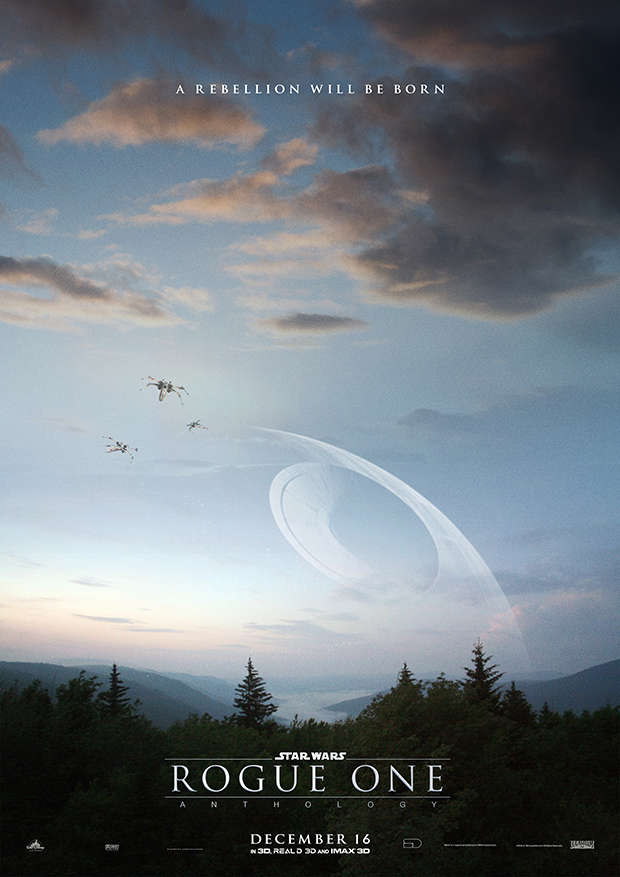
Most recently I've watched two movies. Rogue One: A Star Wars Story (2016) and La La Land (2017). They're both popular movies so I won't be reviewing them in detail here, but I want to write about their similarities. The topic concerns their endings so be warned that things are going to get SPOILERIFIC up in here.

My main point in this write-up is how these two movies, which flirted with mediocrity by the halfway point, were saved by their downer endings, and improved my opinion of them by the time the credits rolled.

Rogue One

I'm not really a Star Wars fan. I always thought of them as soaps, as family drama in space, a reputation that George Lucas made worse (at least to me) with the prequel trilogy. But somehow I've always managed to catch them in the cinema when a new one comes out. I am a child of capitalism, after all. I watched The Force Awakens when it came out in 2015, and was left underwhelmed by it. It was more of the same, with plot points practically ripped from the pages of A New Hope script.

I still decided to go watch Rogue One when it came out, and by the halfway point I found it not too dissimilar from the previous ones. Another family saga, another abandoned child, Stormtroopers who can't shoot for shit while they get picked off by the protagonists. Yawn.

But then the ending came, and it completely changed my mind! Why? Because almost all of the main characters died, blown to smithereens by the Death Star on that beach planet!

That's honestly very refreshing! For so long we've seen the heroes surviving battles and assaults in the previous movies, and for once they decided to go with a downer ending!

And it's not just a matter of my cynicism being satisfied, I like it because it shows the cost of war and the sacrifices that the grunts, these practically expendable Force-less, non-Jedi grunts, have to make in order to assist the Rebellion. There's no medal presentation ceremony and big smiles at the end, only the grim acceptance that the job was completed at a massive loss of lives.

And no other scene showed this better than the one towards the very end. Darth Vader himself boarded an escaping Rebel ship that was carrying the blueprint of the Death Star, and he mowed down a dozen of officers who could do nothing but hope that the time he would take to hack all of them down to death would be just long enough for the data to be smuggled to safety.

It was a brilliant effort by English director Gareth Edwards, who last directed Godzilla (2014), which I enjoyed immensely, although the receptions to it were split down the middle.

It also scored bonus points with me as it achieved one other thing; explain a major plot hole in A New Hope. How could a major weapon of mass destruction, the crown jewel of the Empire, be designed in such a way that a critical flaw can be accessed externally? As it turned out, the flaw was included by its reluctant chief engineer, the father of the movie's protagonist. Brilliant.


La La Land

I've been wanting to watch this musical ever since the first time I heard that catchy song in its trailer. It also stars my favourite actor and actress, Ryan Gosling and Emma Stone as two star-crossed lovers.

But boy was I in for a surprise. I had expected something of a more conventional, costume-and-choreography, song-and-dance Broadway-style musical. I was let down as early as the first song, despite it being perhaps the most conventional number in the musical.

First of all, it's the music that turned me off. Gosling's character is a jazz musician, and almost all of the tunes are jazz ones. And while most stage musicals, and those adapted to the screen, are set in exotic historical settings, La La Land is set in the present time (I had thought it was set in the 1950's or 60's Hollywood from the trailer).

I suppose this is a more of a European/French-style musical? Think Umbrellas of Cherbourg (1964), which I actually haven't seen at all.

Honestly, I would have left the cinema halfway through, if not for the fact that I was there with a girlfriend, and she was leaning against my shoulder asleep. And Gosling and Stone's singing, they have not been classically-trained which I expected from actors in movie musicals.

But just like Rogue One, La La Land's ending turned my opinion on its head. Simply put, the two lovers do not end up together, which is shown in a bittersweet revelation. I respect that commitment to showing what is most likely to happen in real life, that there is no happy ending, even when there are two or three scenes preceding the ending that tease the audience into believing that they both will end up together again.

And when the movie ended, it turned out that the two songs I heard in the trailer were literally the only songs I like from the whole movie. Cheeky bastards.

My VERDICT: Rogue One gets a 7.5 from me, while La La Land has landed itself a 7/10 rating.

On an unrelated note, I should really look into talking to a therapist.

Reading is bad - A Captain America: Civil War review


I've mentioned before that as a normal, male movie-watcher, I can't help but be sucked in by all the superhero movies. Sure, I've also been watching normal, non-superhero movies, but they're not worth writing about here. I haven't been writing about superhero movies either, because for the most part share the opinions most people have about the; that they are enjoyable movies with surprisingly tight plot (at least Marvel Studios ones. Dawn of Justice? Eeesshh.)

Until Captain America: Civil War.

A bit of background is due. I didn't grow up with superhero comic books, and even when I had the means, I mostly read DC Comics. The only Marvel comics I read was the Civil War titles, and it was because they were arranged so it was easy for casual readers like me to follow the story.

Up until Captain America: Civil War, I had enjoyed all of Marvel Studios movies, and I think the previous two Cap movies were among the most brilliant movies by the company.

Even after two viewings, I was left feeling unsatisfied by Civil War, and they were mainly caused by the fact that I could not stop comparing the movie with the source material, among the few Marvel comics that I've read.

One of my biggest gripes towards the movie is the reason behind the clash between Cap and Iron Man. In the comics the reason is the Superhero Registration Act, following an incident involving minor-level costumes that caused an explosion near a school that killed a lot of children, which Captain America could not bring himself to accept. So it was a battle of principals, between the freedom-loving one-time poster boy of Uncle Sam, and Tony Stark, who is essentially a businessman who knows when to cut his losses and play ball with the government.

But in the movie, it is essentially about Cap's brainwashed former bestfriend-turned frenemy Winter Soldier, and whether he is guilty for countless murders. Yes there is the Sokovia Agreement, but it only plays a part for around half an hour, and the conflict in the movie hinges more on whether Cap is going to go with Winter Soldier or Iron Man, like little kids at the playground. And in the end, after the big revelation that buries dead Stark's chance of ever accepting Bucky as a troubled man, when Cap reveals that he has known all along what the Winter Soldier did and hides it from Stark's knowledge, Cap gives a cop-out explanation; "I thought I did it to protect you, but it was actually to protect me," or some such. Really weak there. 

Furthermore, the reveal of the mastermind behind the whole schism, and the reason for doing it, feels really off. I mean this character is a pretty iconic character in the comics, but they've turned it lame.

My second complaint is that the movie feels small. In the comics the story arc involves almost all characters and titles owned by the company, so it is massive.

The movie only had Iron Man, Cap, Black Widow, Spidey, Ant-Man, Falcon, Winter Soldier, Hawkeye, War Machine, Black Panther and Vision. Sure it was a massive achievement getting all these characters and (stars) to be in the movie, but it still felt lacking, knowing that they purposely leave out Thor and Hulk, who supposedly are in the third Thor movie, and knowing that there are more characters on the tv side of Marvel Cinematics Universe that have been left unused. Guys like Daredevil, Jessica Jones, Punisher, SHIELD guys. I have a feeling that they had to rush Spider-Man and Black Panther in because the roster felt a little small.

In fact I've had this reservation ever since the movie was first announced, finding it weird that it was going to be filmed as a Captain America title, instead of an Avengers one, as it involved almost all MCU characters. I have a feeling that this would be better as an Avengers title further down the line, when they have introduced more characters such as Luke Cage, Iron Fist, Doctor Strange and Captain Marvel, and only after they are done with Avengers: Infinity War. If one movie is too cramped to star all these guys, then make it a two-parter, like what they are planning to do with IW.

My next point is one of the criticisms many people have towards MCU movies; that the ending bears very few consequences. The comics end with many characters dying, on both sides of the divide, including one major character, but the movie's ending feels like all that has happened earlier, all the heartaches, all the betrayals, are simply swept under the carpet. Sure, as a business you can't afford to kill off your bankable characters (funnily enough, this doesn't apply to Game of Thrones) but there are still places you can go to without offing your hero.

I have a few other complaints about the movie, the first MCU movie that left me feeling disappointed, but the above are the ones that concern me having already read the source material. Sometimes I wonder if I would have enjoyed it more if I haven't read the comics first.

The GOOD: SpiderMan steals the show, and I really enjoy the fact that he is played by someone who actually looks like a teenager for a change.

The BAD: The mastermind has been normalled-down as compared to his original comics counterpart.

My VERDICT: 6.5/10. It's still enjoyable, but after the very strong and intriguing Cap 1 and 2, it seems like when it comes to superhero movies, the third outing will almost always fail to reach the previous heights. Case in point, The Dark Knight Rises, Sam Raimi's Spiderman 3, X-Men 3 and the recently-released X-Men: Apocalypse.

TRIVIA: In the comics, the Superhero Registration Act would require all costumed superheroes to register their secret identity with the government, but that would not work in the movies as most of their identities are already publicly known, or at least known by the government.

Shoot 'Em Up (2007)


The other day I wrote about John Wick, which I ultimately find to be overrated, and compared it to Shoot 'Em Up.

I first saw it the year it came out, have seen it a couple of times on TV, and recently had watched it again. All this while it has stood the test of time, in my opinion.

The movie stars Clive Owen as Smith, a gruff assassin who finds himself in possession of and protecting a baby wanted by a master assassin played by Paul Giamatti. Along the way, he is helped by a prostitute played by Monica Bellucci who plays the role of wet nurse to the baby.

The movie is a black comedy film, but what I find endearing about Shoot 'Em Up is the tone of the comedy employed. It is funny, but not in a wisecracking, eye-winking way of Die Hard movies or more recently the Marvel superhero movies. The characters are all scowling serious, if dedicatedly over-the-top, but the situations they are put in and their actions give the movie its comedic charm.

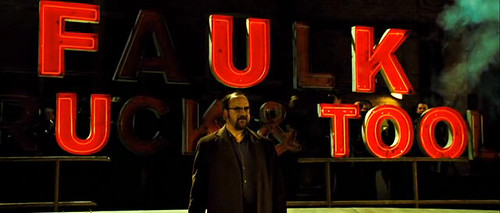
A shoot out near a neon sign leads to this visual gag

And of course, the action too is commendable, and get more over the top and improbable, but always retaining its sense of warped humour, as the movie blazes to its conclusion, a gun battle while falling off a plane.

Why the movie wasn't received much better I don't know why.

The GOOD: Giamatti may not be the most obvious choice for the evil antagonist, but as the film's petulant, self-proclaimed genius villain with a double life as a family-oriented man, he really sells the role.

My VERDICT: I give it an 7/10

TRIVIA: As pointed out by the late Roger Ebert, one year prior to this film, Owen had starred in a movie as a man protecting a baby while being shot at throughout much of the film, Children of Men (2006).

Birdman (2014) and John Wick (2014)

Amidst the current glut of superhero movies, I took the time to watch two non-superhero movies that have been highly praised or won awards; Birdman and John Wick. However I found these two movies to be wanting.

Birdman: 

I heard about it because it won a lot of awards, including the Oscars. Funnily enough, the movie does concern superhero or superhero movies a bit, with Michael Keaton (from Tim Burton's Batman movies) playing a washed out former superhero movie star staging his big comeback by putting on a Broadway theater show. The movie's famous gimmick is that the whole movie appears uncut, as if it were one long take.

However, I was left feeling meh after the movie ended. I don't know whether the movie is pretentious or I am turning into an even bigger philistine. Perhaps it's the much-talked about ambiguous ending. The weird thing is, after I watched the movie, I went online to read the reviews (and make sense of the ending), and many of the reviews and reports made it like the movie is a comedy, which I found surprising. I never once got the feeling that the movie was a comedy while watching it, not even in the failing-to-be-funny sense.

TRIVIA: The three leads, Keaton, Edward Norton and Emma Stone had all starred in big-budget superhero movies, or played superheroes. Keaton as Batman, Norton as The Hulk in The Incredible Hulk (2008) and Stone as Gwen Stacy in the latest Spiderman movies.

John Wick:

I had come across this movie a lot while frequenting a forum. The forum users were full of praise for it, so I finally decided to check it out. It stars Keanu Reeves as a former hitman who is out to avenge his dog, which was killed in a home invasion by the son of his former mob boss. I was drawn to the movie because the forum users praised its action sequences.

However, just like Birdman, I was left feeling "...okay...?" when the credit started rolling. I really can't put my finger on it, but I was left not feeling satiated by the movie. And the action sequences are numerous, but they did not leave me amazed.

I was expecting something as dizzying as what has been shown in the latest Mad Max or by the revival of Mission Impossible. That may not be fair because the movie is not about a lone gunman shooting his way through disposable henchmen to find the boss, but there are movies which had done it right. One example is the little-known Shoot 'Em Up (2007), a self-aware, goofy, funny and satisfying romp between one gunfight to another.

Perhaps it's Keanu. I've not enjoyed anything with him since The Matrix, and in that movie his wooden acting works, in portraying an outsider who is revealed the mind-blowing truth, and constantly trying to make sense of it.

The same thing had also happened to me with an almost similar movie; Dredd (2012). Same plot, same forum users talking a movie up, same outcome. That forum has really got to start weeding out movie studio shills from their users database.

My VERDICT: I rate both these movies 6/10.

Two Malaysian/Malay movies: Lelaki Harapan Dunia and Terbaik Dari Langit

Two months ago, I wrote about two Malaysian/Malay movies the trailer to which came out around the same time. The trailers looked rather hopeful so I made a point to catch both at the cinema.

I'm going to start this review with the one that came out earlier, and also the disappointing one of the two; Lelaki Harapan Dunia, written and directed by Seng Tat Liew. Yep, I said it outright. It's disappointing.


The movie tells the story of a group of villagers who want to relocate an abandoned house mainly due to the wish of Pak Awang who wants the house for his daughter's wedding, when a number of peculiar incidents take place which they attribute to supernatural reasons due to them moving the house. Unbeknownst to them, an African man who's a fugitive from the law has taken refuge in the house.

Sounds like a horror movie right? Or is it a comedy? Or is it drama? Therein lies the problem with Lelaki Harapan Dunia, or its English title Men Who Save the World. The movie tries to be all, without really succeeding to be any. Plot-wise there are also so many threads in it, but most of them are not really resolved by the end of the movie. They are merely teased and repeatedly brought to the fore, but no further explanation is given.

What's with the village idiot/druggie? Why is Pak Awang so insistent on refurbishing the house for his daughter's wedding? And what does he mean by his wistful remark on her getting married out of love? What about the subplot with the price of the camel intended for slaughter? By the end of the movie, these are all not solved. Even the main story is left kind of hanging.

Now that's out of the way, let's talk about the better one, Terbaik Dari Langit which I just watched two days ago. The movie, titled Nova in English, tells the story of Berg (Bront Palarae), a movie director whose obsession with the extraterrestrial and UFO impels him to ask his former school friends to come make an experimental road movie. His friends are up and coming movie star and soon-to-be-married, driver and production technician Ali, and socially-awkward school teacher Toyu. Also in tow is actress Sofea Jane (no, not the real-life actress). His plan involves travelling in a van to shoot the earlier scenes, culminating in shooting the finale at a place where Berg is confident an UFO landing is going to take place. Along the way, they reminisce about their school days and bicker about old grudges, form romance, and criticise Berg's dodgy directing.

Unlike Men, Nova handles multiple subplots better. They don't distract from the main story, and it explains the dynamics of the four school buddies in a non-intrusive way. Furthermore, Langit benefits from a steadier pair of hands in the director's chair, so even if it is funny at times, it never loses track of things.

Another aspect I enjoy about Langit, all the actors AND their characters are used well. The acting is good although nothing to shout about, but most importantly all the characters are well-rounded. Even the comic-reliefs have depth to them. The perpetually nervous Toyu hides a story behind his anxiety at being around them, Sofea is a more significant role than just a pretty face and romantic interest to one of them, the movie star doesn't feel like just another asshole, and Berg's eccentric nature and single-minded obsession is also explained. Furthermore, the young actors portraying the younger version of the leads also look rather similar to their older counterparts, and can act too in the flashback scenes. There are also cameo roles by the late Jalan Ampas era legend Aziz Sattar, and Sharifah Amani.

And in addition to this, this movie is very self-aware and when it comes to the nature of movie-making in Malaysia, taking potshots at Islamic-themed movies that are quite popular at the moment, and the average Malay (Malaysian) audience's reception to movies.

My only gripe about it is the music by the band Pitahati, which is very good, but I think somewhat under-utilised. I wanted more.

I give Lelaki Harapan Dunia 5.5/10 and Terbaik Dari Langit 7/10.

Bringing the dead back to life: The X Files: I Want to Believe (2008) and Veronica Mars (2014)

I love TV series, although I don't necessarily have the time to follow all the good ones. The thing is with good TV series, they don't cater to the lowest common denominator, so more often than not they get cancelled due to low ratings, often before their story arc gets resolved.

Sometimes these prematurely-cancelled TV series get a second life, on the silver screen. I'm not talking about adaptations like The A-Team, Miami Vice, or Starsky and Hutch, but a continuation of the story using the same cast members and writers who appeared on TV. Usually, these movies are produced so that their fans, who are always near-fanatical in their support, get a resolution that they they've been robbed off due to the cancellation.

Recently, I coincidentally watched two of such movies, The X Files: I Want to Believe (2008) and Veronica Mars (2014). 

X-Files was such a hit when it came out in the 1990s, and it captured the feelings of paranoia and mistrust towards the government, as embodied by two FBI agents investigating supernatural cases. It ran for several seasons, before it veered into extra-terrestrial, government conspiracy and alien abduction territory, and cancelled. I Want to Believe has (former) FBI agents Mulder and Scully being asked to help in solving the abduction of an FBI agent, as the only lead the bureau has seems to come from a former priest who seemingly displays clairvoyance abilities.


Meanwhile Veronica Mars the TV series was about the titular character, a teenage private eye who investigates the cases taking place in her hometown, Neptune. The premise may sound cheesy and childish, but it was anything but. It combined elements of film noir and teenage soap well, and the story arcs were genuinely interesting before it got canned on a cliff hanger at the end of its third season.

The movie picks up almost ten years after the events of the third season, with Mars reluctantly coming back to her hometown to help her highschool sweetheart beat a murder charge, and also to attend her high school reunion.


The two movies and TV series have one similarity in that they are both mystery shows, and as series, they both had episodic mysteries, and the bigger slow-burning, season-long mysteries. The movies being limited in airtime duration, don't have this opportunity to engage the fans, and have to be much more straightforward. They can't really have anything unresolved by the end of the movie.

Secondly, these movies seem intent on recapturing the essence of what made them great as TV shows back then, something which isn't necessarily possible. X-Files the TV show was great because it was among the first shows to tap into the paranoia and mistrust. But these sentiments are not exactly fresh these days anymore.

And the movies have to take into account the time that has elapsed since the shows ended, which can be detrimental to the new story that they want to tell. X-Files the series supposedly ended with Mulder as a wanted fugitive, but the movie explains it away by having FBI give Mulder a pardon for helping them with their agent's disappearance. Just like that. And suddenly Mulder and Scully are in a relationship? Huh? They always had a thing for each other in the show in a subtle way, but the movie made it so overt and icky.

In Veronica Mars' case, I remember her PI father being charged for murder just before the show got cancelled, but none of that is mentioned in the movie. And suddenly her sweet heart, Logan is in the navy, but he's not actually on active duty?

I don't know, it seems that when it comes to hit TV shows, that which is dead should just be let to rest in peace, and not revived haphazardly like some aberration, like the Frankenstein monster, just because David Duchovny or Kristin Bell can't find another decent acting gig.

At the very least, they should stick to their original medium like what another one of my favourite TV shows, Arrested Development did. It was revived for a fourth season some years after its cancellation, but it stayed a TV show, and did not have to rush its plot. As a result, it managed to retain a high level of its original run's quality (although Portia de Rossi's forehead and hairline did look weirder than before).

I give X-Files: I Want to Believe 5.5/10 and Veronica Mars 6/10.

Interstellar (2014): or how I learned to suspend my disbelief and love movies

I've always been a big fan of Christopher Nolan, ever since Memento, which was among the earliest movie I reviewed here. Batman Begins, The Dark Knight and The Prestige are also in my list of personal favourites, and that is due to one reason; the motivation of the characters in those movies are believable. Things don't happen just so that the plot can be advanced. I've also written about this. To a certain extent, I've also adopted the same notion in other mediums of art I enjoy, that's why I consider HBO's The Wire as my favourite TV show of all time, and enjoy George RR Martin's A Song of Ice and Fire fantasy novel series; the characters are calculating and they do not make decisions that make the viewers/readers question the validity. These Nolan movies left me thinking about them a few days afterwards, trying to poke holes and find inconsistencies in them. Usually when I found one (Batman won't kill bad guys, but letting Ras Al Ghul plunge to his apparent death on the runaway train is ok?), it did not matter much because they are just minor things and they are overwhelmed by just how enjoyable the rest of the movie is.

(By the way, the reason Gandalf and the Fellowhip do not take the Eagles from the very beginning is because there are Nazguls and dragons.)

This means that it often detracts my enjoyment of certain movies. I do understand that works of art often need to take certain liberties with things such as realism, physics and politics and employ fantastical elements, but I've become too eager to pick holes in said movies. Let's take the example of those Marvel superhero movies. I do enjoy them, but only to a certain extent. I can't get past why Iron Man only needs his basic suit to take out hordes of Chitauri spacecrafts, but needs to wear another armour over his basic armour in order to take on Hulk. That's why I don't really care for Thor, because his movies sit in the magical realm, although they do try to explain it away as very advanced science, which to our relatively primitive civilisation, appears magical.

That's not to say I'm a total logic monster. When it comes to watching comedies and musicals, I am more pliant. My shield just goes up when I watch drama, thriller or any 'serious' movies.

And that is why I didn't mention his other movies above; The Dark Knight Rises and the very popular Inception. I was massively disappointed with TDKR, because there are just so many plot holes in it. Gordon brings his confession note everywhere, later conveniently found by Bane who uses it to demotivate the city residents? Batman simply believes a female criminal who dresses up like a cat, who then walks him right into Bane's trap? Almost all of Gotham's police force is taken to conduct a raid, only to be trapped underground, leaving the city defenseless, and when they are eventually released, they confront Bane's thugs in hand-to-hand combat, in broad daylight? How the hell did Batman manage to get back to Gotham, and sneak into the isolated and barricaded city? If I found more holes, the movie would turn into a documentary about cheese instead.

Whereas with Inception, the problem is not so much with the plot, which I think was more or less watertight for a movie with its scope, but with me not being able to enjoy it. It was just 'meh'. I didn't go home trying to work out what the inconsistencies were.

Naturally, when Nolan's latest movie, Interstellar was announced, I was equal parts excited and wary. It did look exciting with a hefty science fiction subject matter that involves space travel and time, but movies that employ these two usually end up with numerous plot holes. I wondered whether this movie would go the same route as TDKR. Maybe TDKR and Inception were not glitches.

[SPOILERS] After watching Interstellar last week, my take on it is that it does have a few plot holes: the sudden inability of a smart physicist in calculating the time dilation on the first planet, how Cooper manages to come through the other side of the black hole, that sudden talk about love nonsense, how Murphy manages to convince her very angry brother that their father is actually talking to her from wherever he is, and who are 'they' actually?

However, I think this is the first time whereby plot holes in a movie does not affect my enjoyment of it. I thoroughly enjoyed every second of it, and it convinced me that the holes are necessary for me to enjoy it. I cried three times at least, and it made me feel the vastness of our universe and comparatively, how infinitesimal we are.

Interstellar also reminded me again how a movie can use the fantastic to make us forget the world beyond the four walls of the cinema, for the duration of the movie. Just like his earliest movies, I spent the following day just asking questions about the movie's plot, and I did find a few things (which I raised above), but they ultimately don't matter. It managed to sweep me to a different state of mind.

I'm not gonna review the movie because I'm sure other people have done it better than I can. But you should go watch it, the visuals are impressive, the plot arresting and best off all, all this is used to speak about the bigger picture; humanity. The science fiction elements are merely vehicle to tell the story of humanity and our place in the universe.

The GOOD: Bittersweet and heartbreaking theme, beautiful visuals, brilliant execution, spot-on performance, and TARS.
The BAD: That hammy love vs science speech that comes out of nowhere, repeated quoting of Dylan Thomas' "Do not go gentle into that good night".
My VERDICT8/10. Far from perfect, but highly enjoyable and mindblowing in more ways than one.
TRIVIA: Matthew Mcconaughey once starred in another movie about interstellar travel, Contact (1997) as a priest.

Upcoming Malay comedies

I'm quite excited about the coming two remaining months of 2014. I stumbled upon two trailers for two comedies that are going to come out in November and December, respectively. They look rather irreverent and feature quite a few stars in the local movie scene.
The first is Lelaki Harapan Dunia (English title: Men Who Save the World) which tells the story of a group of villagers who encounter an abandoned house in the village which is occupied by an illegal African immigrant. Of course they think he's a ghost, orang minyak (literally 'fuel man') to be exact.

Now if you're not familiar with the supernatural element in the region, orang minyak is a man who practices black magic in order to rape or molest maidens (or the other way around, I'm not sure, this is the 21st century), and applies oil all over his body while he's out on the prowl. So all the men in the village band together to try to move the house, and hilarity ensues (including cross-dressing).

According to its Facebook page which I've linked above, the movie has Harun Salim Bachik and Jalil Hamid, two renowned comedic actors in this country, and it is written and directed by Liew Seng Tat. According to page, it has international support, so that is rather impressive, I guess? And from the trailer below, it looks quite promising. I wonder if they're gonna come out with two cuts; one for the more conservative local market, and another, more raunchier cut for international viewing and the festival circuit.

Also from the trailer, it has something which to me is one trademark of Malay movies which I enjoy, the portrayal of community life among Malays, which is employed frequently by comedy film maker Mamat Khalid (whose Zombi Kampung Pisang (2007) I consider the best modern Malay comedy), and U-Wei Shaari (when is he going to release Hanyut?).
***********************
The second trailer I came upon was Terbaik Dari Langit. The literal English title is 'the best from the sky' or something like that, but the formal English (international?) title is Nova. This one is slated for a 25 Dec 2014 release. The official promotional Facebook page bills itself as a road trip movie, and the trailer provides the following synopsis for the plot: 

"Convinced with what he saw 15 years ago was a UFO, Berg sets on a journey with his 4 friends to capture it on film. They begin to realize that the trip is more than what it seems."

From the trailer, it looks like the movie will have one element I enjoy in movies; meta-references to the process of making a movie (or stage production), usually showing an ambitious yet clueless person at the helm. For example like Get Shorty, Adaptation, Tropic Thunder and Topsy Turvy.

It also has Bront Palarae, my favourite local actor whose movies I've never actually watched, and Sharifah Amani (nice to not see her out of a cheesy tv role for a change). It's directed by Nik Amir Mustapha who previously directed KIL.
So I'm very excited to have something to look forward to in the local film scene, for a change. I think the last movie I enjoyed was Songlap (which I enjoyed immensely and have raved about)

That reminds me, I have Bunohan and I STILL haven't watched it. Shame on me.

Four Lions (2010)

It's been awhile since I last watched this black comedy, so the details are a bit sketchy. But I remember it being hilarious. It's a bit of a sleeper hit, so I think this qualifies for my blog. Furthermore, since the whole issue of ISIS has cropped up, I think the subject is relevant to the viewing public.


Four Lions is about a bunch of radicalised British Muslims who decide to commit their own terror plan in Sheffield, England. The thing is, they are so inept at it that they constantly botch up their plans. Think of the Three Stooges, but instead of poking each other's eye out, they behead each other. Those plans include coming up with threatening videos, going to Pakistan to undergo terror camp, and trying to decide on a worthwhile target to bomb.

Trailer. Hilarious, bro.

The way the movie works is like it's a series of comedy skits featuring the four main characters, who unfortunately are not the sharpest tools in the shed. They constantly bicker with each other, and at times endanger themselves more than society, through their sheer buffoonery. In portraying them as clueless, I think the director essentially humanises the terrorists, and not necessarily in a bad way. Too often evil people are portrayed (in real life as well as on the screen) as completely heartless, when most of them undergo logical progression of thought that normal people have now and then. And now with ISIS, they are often portrayed in the news as total plonkers who can't tell the pointy end of the knife that they use to behead people, which underestimates their actual danger to society, when in reality it is relatively easy for a determined idiot to wreak havoc among the innocent.

The GOOD: Unlike most black comedy, which sacrifices the humour in the later half of the film for drama, Four Lions retains its humour until the chilling end.

My VERDICT: I give it an 8/10

TRIVIA: There's a cameo by pre-Hollywood fame Benedict Cumberbatch.

Kiss Kiss Bang Bang (2005)


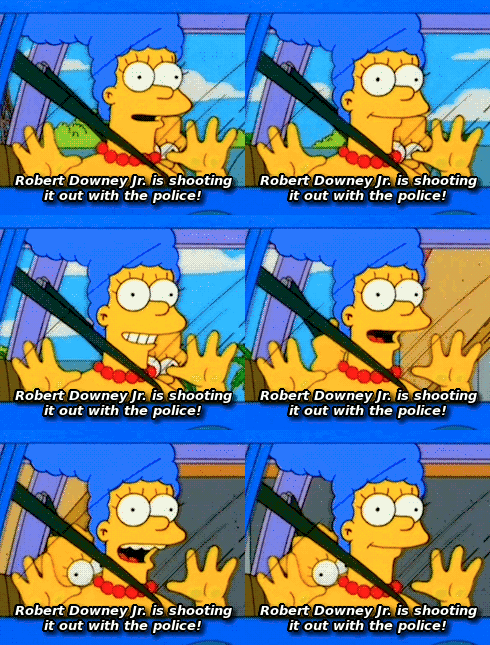
Robert Downey Jr is so hot right now. He's been playing Tony Stark and Sherlock Holmes these past few years, and good for him. But you may not remember the time when his name was a punchline, due to his drugs and alcohol addiction. Below is just one example from that period, from The Simpsons.


For some time, movie studios refused to cast him in their movies, considering him a liability. But Shane Black, the king of 90's buddy cop/action movies writer (Last Action Hero, Last Boy Scout, Lethal Weapon), wanted to make his debut as a director. That movie was Kiss Kiss Bang Bang (2005), adapted from Brett Halliday's novel Bodies Are Where You Find Them. Somehow Black managed to convince the studio to hire Downey Jr as the protagonist, and the movie would hail his return to the forefront of Hollywood.

The movie is about a thief, Harry Lockhart (RDJ) who is unwittingly used as a lure in a Hollywood movie, in order for the studio to lure the actual star they want. A gay private investigator (Val Kilmer) was assigned to provide him with training, but they inadvertently get involved in a Hollywood conspiracy involving murders, and Harry's childhood sweetheart.

The chemistry between Kilmer and RDJ shines through in this movie, and they channeled Black's trademark razor sharp and witty script well. The conspiracy is believable and never loses the audience's interest, peppered with dark humour that never goes away, as it so happens in other black comedies.

The GOOD: Tight and good script that manages to be funny too. A topless Michelle Monaghan

My VERDICT: this movie is a tight 7.5/10

TRIVIA: As RDJ gained more success as Marvel's Iron Man after his comeback in this movie, he and Black would team up again in Iron Man 3 (2013). The movie would feature his trademark fast-talking, buddy action (Stark and Rhodes) and sense of humour, which gelled well with Marvel Cinematic Universe's brand humour. And it's quite well-made, at least better than Iron Man 2.

Collateral (2004)


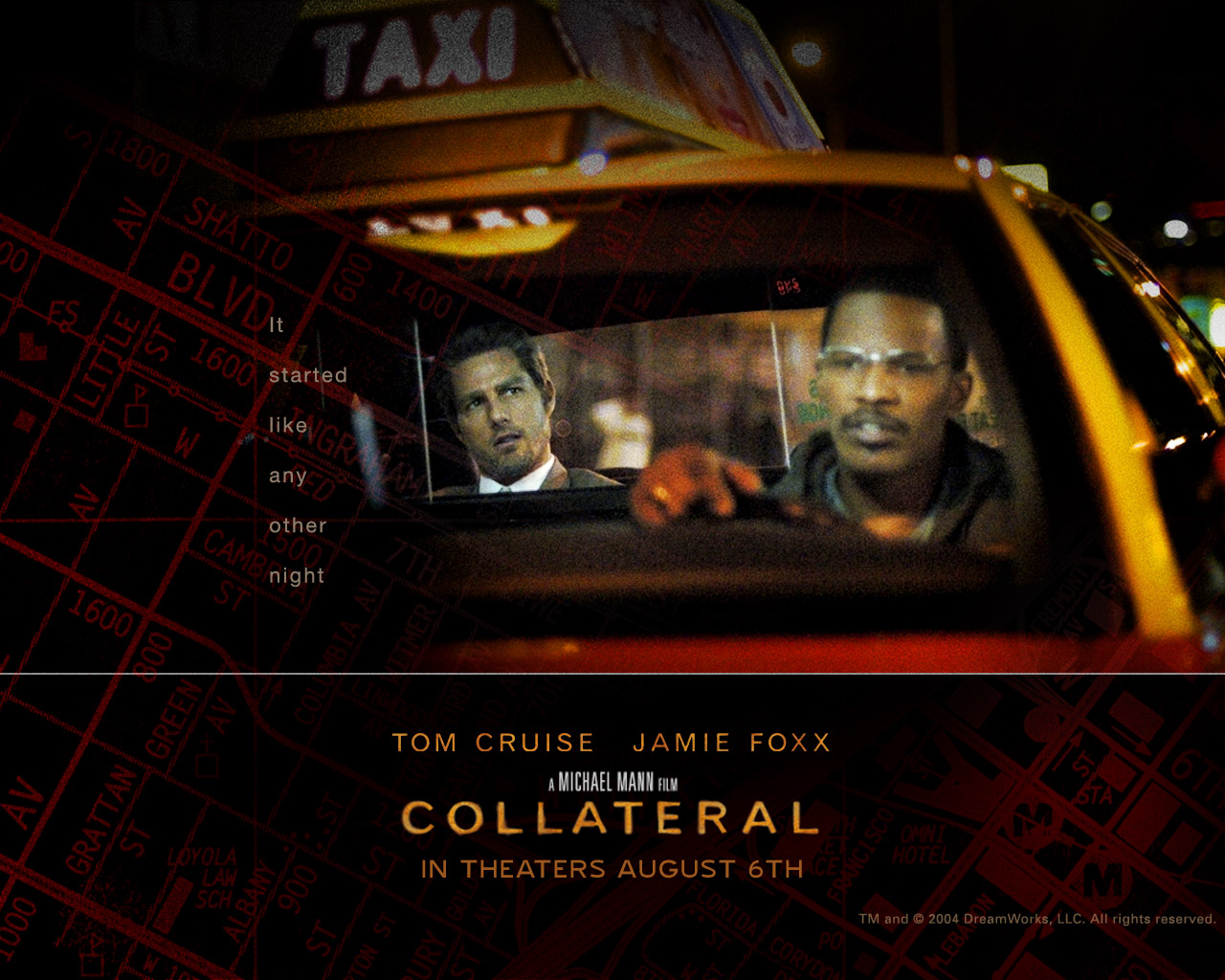
This Michael-Mann directed film is another underrated movie which I enjoyed immensely. I first watched it a long time ago during a midnight showing as a uni undergraduate without knowing much about it, and I had recently watched it again. It still holds up.

First of all what I like about this movie is the fact that Tom Cruise plays the movie's antagonist, his white hair and another fact which I can't divulge here because it's a spoiler. Tom Cruise almost always plays the good guy in his movies, so it was a nice change. 

Jamie Foxx also isn't as suave as he usually is in most of his movies, playing a taxi driver in this. His other dweebish role that I've seen is in the Amazing Spider-Man 2 (2014), as Electro.

The film tells the story of the taxi driver, Max who is forced on gunpoint to drive around an assassin, Vincent (Cruise) who has been hired to assassinate five witnesses of a court case on the same night. Also starring in this movie are Jada Pinket Smith as an attorney and Mark Ruffalo as a detective.

Trailer for the movie

The fact that the movie takes place throughout the duration of one night, and in Max's taxi makes it a quite intimate experience. And the dialogue between the two provides the chemistry, in a not-so-typical way. I mean you wouldn't expect a guy who's held at gunpoint to warm up to his kidnapper, would you?

The GOOD: A satisfyingly intimate experience that interspersed by restrained and not unnecessary action scenes.

The BAD: The soundtrack was a little underwhelming. Mann eschews typical orchestration, but some songs used as accompaniment were a little jarring, especially one song from the rock band Audioslave. The same problem would surface again in Mann's next movie, his movie adaptation of the same TV show which he had produced in the 80's; Miami Vice (2006).

My VERDICT: this movie is a 7/10

TRIVIA: Tom Cruise would play against typecast again in his cameo role as a movie producer, complete with a fat-suit and a bald cap, in Tropic Thunder (2008). Tell me this isn't the most hilarious thing you've seen today.


The return of the strong, silent type lead in Drive (2011)


It's been quite sometime since strong, silent male lead is 'in' in Hollywood. It used to be John Wayne, Clint Eastwood, but I guess they sort of fell into disinterest with the loss of audience interest in westerns. In the late 80's early 90's we had wise-cracking, gun-blazing action heroes like Arnold and Bruce Willis, and in the 2000's the taciturn hero made something of a comeback, although it is not entirely similar to those usually found in old westerns.

Jason Bourne brought this trope into the frenetic, shaky-cam action genre. Then EON Studio decided they should emulate Bourne with James Bond, and they rebooted the franchise with a younger, less charming, unsmiling Bond. I see a bit of this trope in Clive Owen's gunman character in Shoot Em Up too. But they are not exactly similar to the roles played by John Wayne and Clint Eastwood, in the sense that they are usually characters who are always on the backfoot, being chased by the bad guys after they were double-crossed or betrayed. They are very vulnerable. On the scale of white-knight to anti-hero, they are more often than not closer to the former, whereas the older characters always have this conniving streak in them, even if what they are fighting for is something good. They are always one step ahead of the bad guys, and action is almost never the focus of the movies they are in. They do shoot guns or rifles, but not in a dual-wielding-dive-from-behind-cover type of shooting. And they are not martial artists, their fights are brawls, or fistfights.

This is why I love Nicolas Winding Refn's Drive, his Hollywood debut. The Danish director's movie has minimal dialogue, and the casting of Ryan Goesling as the lead works really well with the lack of dialogue. The story is about a mechanic, stunt and getaway driver who befriends his neighbour and her young son. Things unravel when the woman's husband comes back from prison, and the Driver (he is unnamed throughout the movie) is embroiled with several underworld figures. Playing the neighbour is Carey Mulligan, and the movie is supported by Ron Perlman as a mob boss, Bryan Cranston as the Driver's friend, Oscar Isaac as the neighbour's husband and Mad Men's Christina Hendricks.

The movie shows the kind of man Goesling's character is, a loner who is efficient at what he does, even in speech. He is able to convey what he feels (or that he's hiding something) with very few words, and the progression in his relationship with his neighbour is enjoyable to watch. Even when he is in a scene with other characters, they talk more than he does.

I talked about the scheming part of the strong silent type, and you see the Driver doing this, even though he ultimately does it not for himself. And unlike the slightly similar heroes of the 2000's, he is violent (God, the elevator scene), but not in a gun-blazing way.

And what really sells it for me is that Goesling is not a typical rough-looking muscle-bound, tough guy. He's physically a bit of a pretty boy, used to be one of those Disney kids, and this contrast makes his movie persona even more enigmatic and interesting. He would go on to play this type of character in another movie, The Place Beyond the Pines (2012). Although this movie isn't as good as Drive, I still enjoyed his performance in it. I guess the strong, silent type lead has a torch-bearer in Ryan Goesling.

In addition, this movie has a nice 80's vibe going on with the music (check out the soundtrack) and the cinematography, although it's not actually set in that decade.

The GOOD: Good story made into a exceptional movie by Goesling's performance.

The BAD: Same criticism of an earlier movie of Refn's that I reviewed, Valhalla (2009).The ultra-violence. The shotgun-to-the head scene, the elevator scene. I kind of get the need for blood, but what does gore serve to the audience?

My VERDICT: this movie is a 7.5/10

TRIVIA: Refn and Goesling would collaborate again for Only God Forgives (2013), which I haven't seen. The reviews are not very good though, and I don't really feel like putting up with another head-stomping scene if the movie isn't any good.