Showing posts with label movie review. Show all posts

Good endings are bad for you - Rogue One: A Star Wars Story (2016) and La La Land (2017)

Most recently I've watched two movies. Rogue One: A Star Wars Story (2016) and La La Land (2017). They're both popular movies so I won't be reviewing them in detail here, but I want to write about their similarities. The topic concerns their endings so be warned that things are going to get SPOILERIFIC up in here.

My main point in this write-up is how these two movies, which flirted with mediocrity by the halfway point, were saved by their downer endings, and improved my opinion of them by the time the credits rolled.

Rogue One
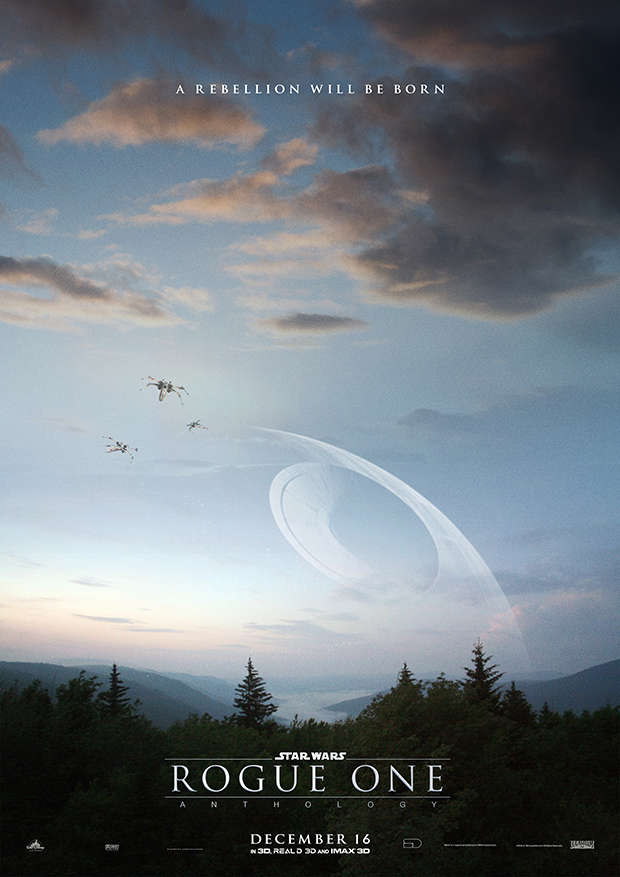
I'm not really a Star Wars fan. I always thought of them as soaps, as family drama in space, a reputation that George Lucas made worse (at least to me) with the prequel trilogy. But somehow I've always managed to catch them in the cinema when a new one comes out. I am a child of capitalism, after all. I watched The Force Awakens when it came out in 2015, and was left underwhelmed by it. It was more of the same, with plot points practically ripped from the pages of A New Hope script.

I still decided to go watch Rogue One when it came out, and by the halfway point I found it not too dissimilar from the previous ones. Another family saga, another abandoned child, Stormtroopers who can't shoot for shit while they get picked off by the protagonists. Yawn.

But then the ending came, and it completely changed my mind! Why? Because almost all of the main characters died, blown to smithereens by the Death Star on that beach planet!

That's honestly very refreshing! For so long we've seen the heroes surviving battles and assaults in the previous movies, and for once they decided to go with a downer ending!

And it's not just a matter of my cynicism being satisfied, I like it because it shows the cost of war and the sacrifices that the grunts, these practically expendable Force-less, non-Jedi grunts, have to make in order to assist the Rebellion. There's no medal presentation ceremony and big smiles at the end, only the grim acceptance that the job was completed at a massive loss of lives.

And no other scene showed this better than the one towards the very end. Darth Vader himself boarded an escaping Rebel ship that was carrying the blueprint of the Death Star, and he mowed down a dozen of officers who could do nothing but hope that the time he would take to hack all of them down to death would be just long enough for the data to be smuggled to safety.

It was a brilliant effort by English director Gareth Edwards, who last directed Godzilla (2014), which I enjoyed immensely, although the receptions to it were split down the middle.

It also scored bonus points with me as it achieved one other thing; explain a major plot hole in A New Hope. How could a major weapon of mass destruction, the crown jewel of the Empire, be designed in such a way that a critical flaw can be accessed externally? As it turned out, the flaw was included by its reluctant chief engineer, the father of the movie's protagonist. Brilliant.


La La Land

I've been wanting to watch this musical ever since the first time I heard that catchy song in its trailer. It also stars my favourite actor and actress, Ryan Gosling and Emma Stone as two star-crossed lovers.

But boy was I in for a surprise. I had expected something of a more conventional, costume-and-choreography, song-and-dance Broadway-style musical. I was let down as early as the first song, despite it being perhaps the most conventional number in the musical.

First of all, it's the music that turned me off. Gosling's character is a jazz musician, and almost all of the tunes are jazz ones. And while most stage musicals, and those adapted to the screen, are set in exotic historical settings, La La Land is set in the present time (I had thought it was set in the 1950's or 60's Hollywood from the trailer).

I suppose this is a more of a European/French-style musical? Think Umbrellas of Cherbourg (1964), which I actually haven't seen at all.

Honestly, I would have left the cinema halfway through, if not for the fact that I was there with a girlfriend, and she was leaning against my shoulder asleep. And Gosling and Stone's singing, they have not been classically-trained which I expected from actors in movie musicals.

But just like Rogue One, La La Land's ending turned my opinion on its head. Simply put, the two lovers do not end up together, which is shown in a bittersweet revelation. I respect that commitment to showing what is most likely to happen in real life, that there is no happy ending, even when there are two or three scenes preceding the ending that tease the audience into believing that they both will end up together again.

And when the movie ended, it turned out that the two songs I heard in the trailer were literally the only songs I like from the whole movie. Cheeky bastards.

My VERDICT: Rogue One gets a 7.5 from me, while La La Land has landed itself a 7/10 rating.

On an unrelated note, I should really look into talking to a therapist.

Shoot 'Em Up (2007)


The other day I wrote about John Wick, which I ultimately find to be overrated, and compared it to Shoot 'Em Up.

I first saw it the year it came out, have seen it a couple of times on TV, and recently had watched it again. All this while it has stood the test of time, in my opinion.

The movie stars Clive Owen as Smith, a gruff assassin who finds himself in possession of and protecting a baby wanted by a master assassin played by Paul Giamatti. Along the way, he is helped by a prostitute played by Monica Bellucci who plays the role of wet nurse to the baby.

The movie is a black comedy film, but what I find endearing about Shoot 'Em Up is the tone of the comedy employed. It is funny, but not in a wisecracking, eye-winking way of Die Hard movies or more recently the Marvel superhero movies. The characters are all scowling serious, if dedicatedly over-the-top, but the situations they are put in and their actions give the movie its comedic charm.

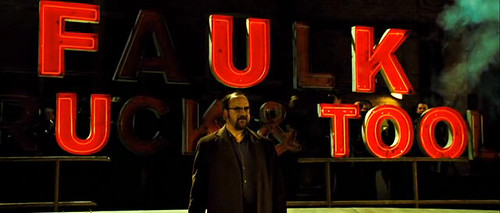
A shoot out near a neon sign leads to this visual gag

And of course, the action too is commendable, and get more over the top and improbable, but always retaining its sense of warped humour, as the movie blazes to its conclusion, a gun battle while falling off a plane.

Why the movie wasn't received much better I don't know why.

The GOOD: Giamatti may not be the most obvious choice for the evil antagonist, but as the film's petulant, self-proclaimed genius villain with a double life as a family-oriented man, he really sells the role.

My VERDICT: I give it an 7/10

TRIVIA: As pointed out by the late Roger Ebert, one year prior to this film, Owen had starred in a movie as a man protecting a baby while being shot at throughout much of the film, Children of Men (2006).

Interstellar (2014): or how I learned to suspend my disbelief and love movies

I've always been a big fan of Christopher Nolan, ever since Memento, which was among the earliest movie I reviewed here. Batman Begins, The Dark Knight and The Prestige are also in my list of personal favourites, and that is due to one reason; the motivation of the characters in those movies are believable. Things don't happen just so that the plot can be advanced. I've also written about this. To a certain extent, I've also adopted the same notion in other mediums of art I enjoy, that's why I consider HBO's The Wire as my favourite TV show of all time, and enjoy George RR Martin's A Song of Ice and Fire fantasy novel series; the characters are calculating and they do not make decisions that make the viewers/readers question the validity. These Nolan movies left me thinking about them a few days afterwards, trying to poke holes and find inconsistencies in them. Usually when I found one (Batman won't kill bad guys, but letting Ras Al Ghul plunge to his apparent death on the runaway train is ok?), it did not matter much because they are just minor things and they are overwhelmed by just how enjoyable the rest of the movie is.

(By the way, the reason Gandalf and the Fellowhip do not take the Eagles from the very beginning is because there are Nazguls and dragons.)

This means that it often detracts my enjoyment of certain movies. I do understand that works of art often need to take certain liberties with things such as realism, physics and politics and employ fantastical elements, but I've become too eager to pick holes in said movies. Let's take the example of those Marvel superhero movies. I do enjoy them, but only to a certain extent. I can't get past why Iron Man only needs his basic suit to take out hordes of Chitauri spacecrafts, but needs to wear another armour over his basic armour in order to take on Hulk. That's why I don't really care for Thor, because his movies sit in the magical realm, although they do try to explain it away as very advanced science, which to our relatively primitive civilisation, appears magical.

That's not to say I'm a total logic monster. When it comes to watching comedies and musicals, I am more pliant. My shield just goes up when I watch drama, thriller or any 'serious' movies.

And that is why I didn't mention his other movies above; The Dark Knight Rises and the very popular Inception. I was massively disappointed with TDKR, because there are just so many plot holes in it. Gordon brings his confession note everywhere, later conveniently found by Bane who uses it to demotivate the city residents? Batman simply believes a female criminal who dresses up like a cat, who then walks him right into Bane's trap? Almost all of Gotham's police force is taken to conduct a raid, only to be trapped underground, leaving the city defenseless, and when they are eventually released, they confront Bane's thugs in hand-to-hand combat, in broad daylight? How the hell did Batman manage to get back to Gotham, and sneak into the isolated and barricaded city? If I found more holes, the movie would turn into a documentary about cheese instead.

Whereas with Inception, the problem is not so much with the plot, which I think was more or less watertight for a movie with its scope, but with me not being able to enjoy it. It was just 'meh'. I didn't go home trying to work out what the inconsistencies were.

Naturally, when Nolan's latest movie, Interstellar was announced, I was equal parts excited and wary. It did look exciting with a hefty science fiction subject matter that involves space travel and time, but movies that employ these two usually end up with numerous plot holes. I wondered whether this movie would go the same route as TDKR. Maybe TDKR and Inception were not glitches.

[SPOILERS] After watching Interstellar last week, my take on it is that it does have a few plot holes: the sudden inability of a smart physicist in calculating the time dilation on the first planet, how Cooper manages to come through the other side of the black hole, that sudden talk about love nonsense, how Murphy manages to convince her very angry brother that their father is actually talking to her from wherever he is, and who are 'they' actually?

However, I think this is the first time whereby plot holes in a movie does not affect my enjoyment of it. I thoroughly enjoyed every second of it, and it convinced me that the holes are necessary for me to enjoy it. I cried three times at least, and it made me feel the vastness of our universe and comparatively, how infinitesimal we are.

Interstellar also reminded me again how a movie can use the fantastic to make us forget the world beyond the four walls of the cinema, for the duration of the movie. Just like his earliest movies, I spent the following day just asking questions about the movie's plot, and I did find a few things (which I raised above), but they ultimately don't matter. It managed to sweep me to a different state of mind.

I'm not gonna review the movie because I'm sure other people have done it better than I can. But you should go watch it, the visuals are impressive, the plot arresting and best off all, all this is used to speak about the bigger picture; humanity. The science fiction elements are merely vehicle to tell the story of humanity and our place in the universe.

The GOOD: Bittersweet and heartbreaking theme, beautiful visuals, brilliant execution, spot-on performance, and TARS.
The BAD: That hammy love vs science speech that comes out of nowhere, repeated quoting of Dylan Thomas' "Do not go gentle into that good night".
My VERDICT8/10. Far from perfect, but highly enjoyable and mindblowing in more ways than one.
TRIVIA: Matthew Mcconaughey once starred in another movie about interstellar travel, Contact (1997) as a priest.

Four Lions (2010)

It's been awhile since I last watched this black comedy, so the details are a bit sketchy. But I remember it being hilarious. It's a bit of a sleeper hit, so I think this qualifies for my blog. Furthermore, since the whole issue of ISIS has cropped up, I think the subject is relevant to the viewing public.


Four Lions is about a bunch of radicalised British Muslims who decide to commit their own terror plan in Sheffield, England. The thing is, they are so inept at it that they constantly botch up their plans. Think of the Three Stooges, but instead of poking each other's eye out, they behead each other. Those plans include coming up with threatening videos, going to Pakistan to undergo terror camp, and trying to decide on a worthwhile target to bomb.

Trailer. Hilarious, bro.

The way the movie works is like it's a series of comedy skits featuring the four main characters, who unfortunately are not the sharpest tools in the shed. They constantly bicker with each other, and at times endanger themselves more than society, through their sheer buffoonery. In portraying them as clueless, I think the director essentially humanises the terrorists, and not necessarily in a bad way. Too often evil people are portrayed (in real life as well as on the screen) as completely heartless, when most of them undergo logical progression of thought that normal people have now and then. And now with ISIS, they are often portrayed in the news as total plonkers who can't tell the pointy end of the knife that they use to behead people, which underestimates their actual danger to society, when in reality it is relatively easy for a determined idiot to wreak havoc among the innocent.

The GOOD: Unlike most black comedy, which sacrifices the humour in the later half of the film for drama, Four Lions retains its humour until the chilling end.

My VERDICT: I give it an 8/10

TRIVIA: There's a cameo by pre-Hollywood fame Benedict Cumberbatch.

The return of the strong, silent type lead in Drive (2011)


It's been quite sometime since strong, silent male lead is 'in' in Hollywood. It used to be John Wayne, Clint Eastwood, but I guess they sort of fell into disinterest with the loss of audience interest in westerns. In the late 80's early 90's we had wise-cracking, gun-blazing action heroes like Arnold and Bruce Willis, and in the 2000's the taciturn hero made something of a comeback, although it is not entirely similar to those usually found in old westerns.

Jason Bourne brought this trope into the frenetic, shaky-cam action genre. Then EON Studio decided they should emulate Bourne with James Bond, and they rebooted the franchise with a younger, less charming, unsmiling Bond. I see a bit of this trope in Clive Owen's gunman character in Shoot Em Up too. But they are not exactly similar to the roles played by John Wayne and Clint Eastwood, in the sense that they are usually characters who are always on the backfoot, being chased by the bad guys after they were double-crossed or betrayed. They are very vulnerable. On the scale of white-knight to anti-hero, they are more often than not closer to the former, whereas the older characters always have this conniving streak in them, even if what they are fighting for is something good. They are always one step ahead of the bad guys, and action is almost never the focus of the movies they are in. They do shoot guns or rifles, but not in a dual-wielding-dive-from-behind-cover type of shooting. And they are not martial artists, their fights are brawls, or fistfights.

This is why I love Nicolas Winding Refn's Drive, his Hollywood debut. The Danish director's movie has minimal dialogue, and the casting of Ryan Goesling as the lead works really well with the lack of dialogue. The story is about a mechanic, stunt and getaway driver who befriends his neighbour and her young son. Things unravel when the woman's husband comes back from prison, and the Driver (he is unnamed throughout the movie) is embroiled with several underworld figures. Playing the neighbour is Carey Mulligan, and the movie is supported by Ron Perlman as a mob boss, Bryan Cranston as the Driver's friend, Oscar Isaac as the neighbour's husband and Mad Men's Christina Hendricks.

The movie shows the kind of man Goesling's character is, a loner who is efficient at what he does, even in speech. He is able to convey what he feels (or that he's hiding something) with very few words, and the progression in his relationship with his neighbour is enjoyable to watch. Even when he is in a scene with other characters, they talk more than he does.

I talked about the scheming part of the strong silent type, and you see the Driver doing this, even though he ultimately does it not for himself. And unlike the slightly similar heroes of the 2000's, he is violent (God, the elevator scene), but not in a gun-blazing way.

And what really sells it for me is that Goesling is not a typical rough-looking muscle-bound, tough guy. He's physically a bit of a pretty boy, used to be one of those Disney kids, and this contrast makes his movie persona even more enigmatic and interesting. He would go on to play this type of character in another movie, The Place Beyond the Pines (2012). Although this movie isn't as good as Drive, I still enjoyed his performance in it. I guess the strong, silent type lead has a torch-bearer in Ryan Goesling.

In addition, this movie has a nice 80's vibe going on with the music (check out the soundtrack) and the cinematography, although it's not actually set in that decade.

The GOOD: Good story made into a exceptional movie by Goesling's performance.

The BAD: Same criticism of an earlier movie of Refn's that I reviewed, Valhalla (2009).The ultra-violence. The shotgun-to-the head scene, the elevator scene. I kind of get the need for blood, but what does gore serve to the audience?

My VERDICT: this movie is a 7.5/10

TRIVIA: Refn and Goesling would collaborate again for Only God Forgives (2013), which I haven't seen. The reviews are not very good though, and I don't really feel like putting up with another head-stomping scene if the movie isn't any good.

Song and dance

Musical movies are one genre that I enjoy watching immensely . There's something about musicals that is hard to dislike. A good musical usually has a combination of these three elements; a well-choreographed dance sequence, catchy songs and hilarious turns by a number of the characters.

The funny thing is, I used to dismiss the genre as fluff, while growing up. I saw Mary Poppins, Chitty Chitty Bang Bang, and The Sound of Music, all of which was a little too childish for my liking so I decided to not pay too much attention to the genre as a whole. Furthermore, I found it very, very hard to suspend my disbelief at the sight of a bunch of people breaking into song and dance mid-conversation.

But one movie arrived to change my perception of the whole genre and the potential it has to escape beyond the fluff and escapism.

Chicago (2002)


Initially, I had heard about this movie and its multiple Oscar wins, but since it is a musical, I had not paid it any mind. And then in university I got involved in theatre and someone showed it and I was completely blown away by it. The movie is about two stage performers who murder their respective partners who then take advantage of their trials to vie and stay in the spotlight. First of all, it succeeded in making me suspend my disbelief with the whole song and dance schtick, using the 'it's all in their head' method of explaining away the characters penchant for singing and dancing. I bought it, and afterwards I found it easier to accept the notion that in musical-movie universe, people do it all the time, even when they do not employ 'it's all in the head' method.

Secondly, Chicago is very cynical and is a dark comedy. It's lampooning of narcissism, infidelity, the justice system and the act of murder sits well with my preference, after the unicorn-sunshine-and-rainbow aesthetics of the Disney musicals. 

Finally, of course it would not have worked if not for its song and dance. The songs are all catchy, and after watching more musicals, I realised that the choreography in Chicago is magnificent. A lot of musical movies unimaginatively transplants their stage production (where most musical movies originate from) onto the silver-screen, but Chicago understands and utilises the advantage owned by the silver screen, to do more than just duplicate its stage production. I give this one a solid 10/10.

Grease (1978)

This movie needs very little explanation, and I also enjoyed it. Like Chicago, its strength is its evergreen songs, and despite its high-school setting (and the oldest-looking American high-schoolers), is at times crass and deals with topics that are not suitable for teenagers such as teenage pregnancy, and contraception. The choreography is a bit straightforward, but every scene with John Travolta is simply mesmerising. No wonder he was the hot stuff in the 70's. Grease gets an 8/10 from me.

The Producers (2005)

This is among the few relatively-recent musical movies that I enjoy immensely. The movie, about a theatre producer and his associate who come up with a scheme to stage a sure-to-fail production to fleece the investors' money, has a bit of a kooky beginning. It originated as a very successful non-musical movie by renowned comic and lampoonist Mel Brooks in 1968, and then in the 2000's he adapted it into an equally successful stage musical, so from there it was only natural that it would find its way to the silver screen. It is a bit of a straightforward adaptation, but since the source material is already good to begin with, the movie adaptation is able to get away with it.

In addition to being hummable, the songs are downright hilarious and at times almost juvenile, and have that trademark Mel Brooks-wit. It is not as dark as Chicago, but the crass-meter is through the roof with Producers. It lampoons everything from homosexuality, Nazism, old ladies, and the Swede. I remember watching it at the cinema and getting my stomach cramped from laughing too hard. And what was even more remarkable, not one second of it was censored by FINAS. Somebody there must love musicals. Or is gay. This, too, gets an 8/10 from me.

Honourable mention

West Side Story (1961) - A bit serious for a musical, but it does drama very well. Wonderful choreography.

Les Miserables (2012) - Strong first act is let down by focus on weepy love story in the second. Not really the movie's fault, the source material goes that way.

Hairspray (2007) - Similar origin to Producers. Non-musical movie gets turned into a stage musical into a movie musical. Bubble-gummy and colourful first half is replaced by preachy love-letter to multi-culturalism in the second.


Recent movies round up

It's been awhile since I watched an underrated movie that I like, so this time I'll just do a brief roundup of the recent movies I watched. It's blockbuster season again, and we welcome back cinematic explosions and men in tights.

My limited time now means that whatever entertainment I indulge in, I have to make sure that the enjoyment is guaranteed, that means I can ill afford to experiment with my movies and have to watch the well-rated mainstream ones. That's also why I'm still single, I mean committing to a woman does not guarantee success these days heheh.

1) Godzilla (2014)

When I first learned about this movie, I went "Really? But why?" and did not think much about it. The 1998 Roland Emmerich version is forgettable, even if slightly enjoyable, so I wondered why another adaptation was deemed necessary. But when the Asian trailer came out, it showed another monster and I decided I had to watch it, as that has to mean that Godzilla is not the antagonist, like the role he plays in the 1998 version. But I did wonder, as to why they revealed the inclusion of the winged monster (Muto) in that trailer.

I cannot answer that without spoiling it for you, but suffice for me to say that this is the strength of the movie, minor plot twists throughout the movie. Enough to get you surprised, but not to make it the focus of the movie without them feeling ham-fisted. 

The director took something that could be straight forward and unmemorable in the hands of lesser directors, and made the movie stand out. And Bryan Cranston's casting made the human element of the monster movie better. And I'm not a fan of the Japanese Godzilla, but other Internet users say that this version is more accurate to the original character. My only gripe is that there is not enough monster battle, something that I share with many other viewers. However, I concur that something as awe-inspiring as the sight of two monsters levelling San Francisco must be shown in moderation, or the excess will detract from the experience. Godzilla gets a 8/10 from me.

2) Edge of Tomorrow

I just watched this science fiction flick yesterday, and it was an enjoyable experience. It's nothing to shout about, but it's good nonetheless. A soldier, played by Tom Cruise, who is forcefully-conscripted to fight in an alien invasion finds himself reliving the same day over and over again every time he dies, which means that he is able to train himself and learn about the true nature of the aliens, with the help of a war hero played by a blonde Emily Blunt. So it's like a combination of Starship Troopers, Groundhog Day and the first 30 minutes of Saving Private Ryan.

The effects are cool, the plot okay and the chemistry between Tom Cruise and Emily Blunt is believable. The best part of the movie is when the point of view unknowingly shifts from Tom Cruise's character to Emily Blunt's, so the viewers are left wondering whether what is happening on the screen is happening for the first time or it has happened before to him. I give it a 7/10 too. By the way this movie is originally from a Japanese teen novel titled 'All You Need is Kill'. P/S: I would shamelessly ignore the war effort and die repeatedly if that means being greeted by a stretching Emily Blunt every time. Watch it and you'll understand.

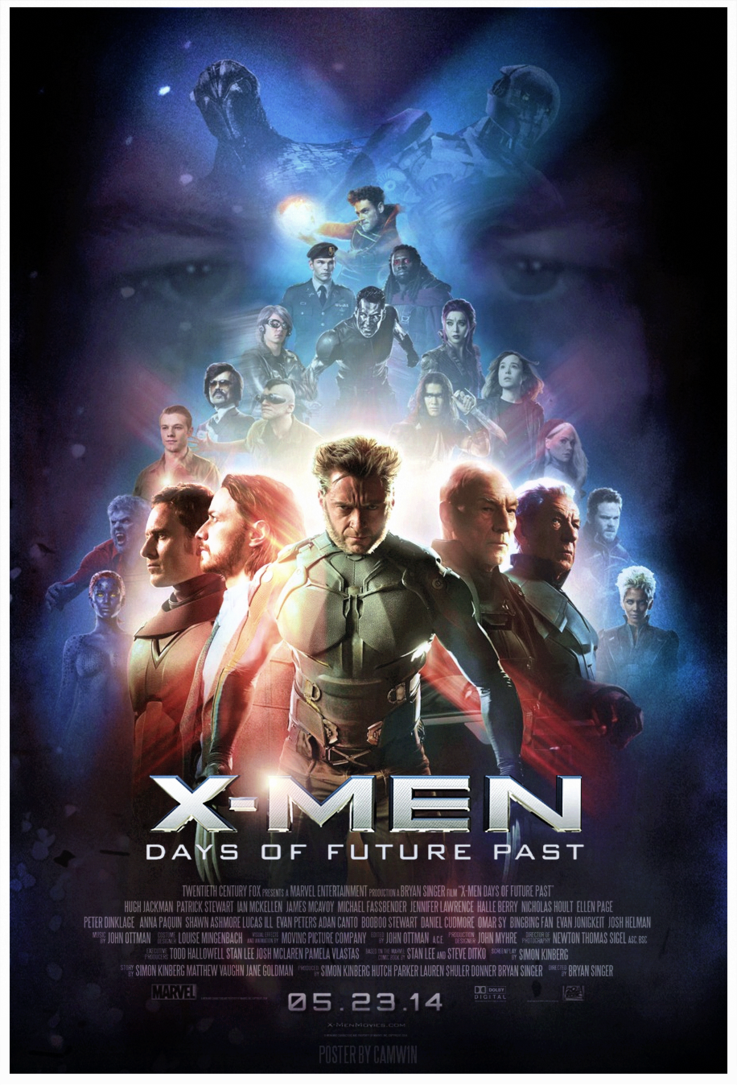
3) X-Men: Days of Future Past


Admittedly, after the suck-fest that was X-Men 3 I would have given DOFP a miss. But First Class sort of revived the franchise so I gave DOFP a chance, although I was still reluctant that the inclusion of the previous franchise's cast would bring along the bloated-ness associated with it, and with Hugh Jackman's Wolverine. I was glad that aside from being an enjoyable movie, DOFP is also able to do something else important to the franchise, ret-con it and open a new chapter for movie X-Men. 

Now if you're not familiar with comic books, to ret-con something means to change the history of a character, to give it a clean slate. This happens a lot, especially with long-running and famous characters. It is understandable, after all after 50, 60 years of publication, there is not much wiggle room left from which to advance the plot. Sometimes it is done casually without much explanation given as to the changes minor or major, a lot of times some supernatural of pseudo-science reasons are given such as time-travel, ripples in the space-time continuum, or magic. It's a bit silly, sure, but still necessary for the longevity of the character and the comic book medium itself. The most recent one is the retconning of the DC Comics universe, now dubbed the New-52.

This is what happens in DOFP. In the future, mutants are hunted by shape-sifting robots Sentinels, and Professor X (Patrick Stewart), Magneto (Ian Mckellen) band together with Kitty Pride, Storm and Blink to send Wolverine back through time to stop an event which brought about the creation of the Sentinels, and eventual the destruction of mutants. In the 1970's Wolverine finds Professor X and Magneto's younger selves to enlist their help in stopping the event.

I love this movie on account of them embracing ret-conning as a tool in their storytelling, much like in the comic books. And they utilise it well, as a lot of times when it is employed in the comics, the writers are criticised for the decision by the readers. Without going into too much detail, in DOFP it is part of the story via time-travel, and it also erases the bloated X2 and X3 from the equation. Furthermore, it also buries the whole humans-are-afraid-of-mutants plot that has always been the main source of conflict in the franchise. There are only so many times that that story can be told. It will be replaced by a new big bad altogether, so please stay until the final credit. DOFP gets a 7/10 from me.

I want good character-motivation

After all these years, I've only watched Crouching Tiger, Hidden Dragon last night. The movie is great, the cinematography beautiful, and the action scenes are simply mindblowing, especially the fight scene on the bamboo plants. However, what makes it brilliant is how the director; Ang Lee uses all those kung fu and action scenes to tell a very poignant story about what essentially are very human desires and longing. But I'm not writing today to review this movie. After all it's rather accessible, and a lot of reviews have been written about it. That's not what I intend to do in this blog.

I want to talk about a notion that I have always had, that I think was finally confirmed upon watching Crouching Tiger. I have my own list of what I consider my personal favourites, and I've always thought that they share one similarity; believable character motivation that is propelled by believable emotions. What are these movies? Saving Private Ryan, Lord of the Rings, Memento, Batman Begins, The Matrix, Eternal Sunshine of the Spotless Mind, Songlap. I know, these are quite popular movies, nothing too art-housey nor obscure. I'm not gonna lie, I enjoy watching giant robots punch each other to pieces, and digital messiahs stop bullets with a wave of his hand in blockbuster movies as much as the next guy. But for these movies to transcend their status as mere explosion-fests, to attain immortality and occupy their place as my favourites, takes a lot more. And that is their strong emotional core. This essentially means that in these movies, the characters' actions are motivated by the sort of feelings that are relatable to the audience. Whatever the actions taken by them on the screen are, they make us go "I guess I'd put on a bat costume, leap off buildings, and bash criminals' heads in too, if I were a billionaire whose parents were murdered by a mugger". Let's begin with...'Batman Begins', haha. 

It would be too far a leap if the story has Bruce Wayne put on a bat costume to fight crime straightaway, but the story gains legitimacy by having him try to exact revenge on his parents' murderer first. And the movie (or the source material, I don't read a lot of comic books) then has it that someone else gets to the murderer first, depriving him of that one thing that he thinks is going to let him sleep more peacefully at night. And then his childhood sweetheart gets disappointed at him for wanting to exact revenge, saying that his dead parents would be equally disappointed of him. He's a boy whose parents will not be there anymore to comfort when he has nightmares, and his only chance at some semblance of happiness or satisfaction is taken away from him. On top of that, his girlfriend is upset at him. He's all alone in this world. ONLY THEN the batsuit, batmobile, and gadgets feature in the movies. 

And even then the movie doesn't ditch its emotional core. He becomes Batman at night to ensure that no one has to suffer what he had gone through, but far from it being done just out of selflessness, he also does it out of a very personal need to silence the screams of his murdered parents that he hears every night (comic book fans have said that Batman is actually just as crazy as the villains he battles). What's worse is at the end, upon defeating his enemies and revealing to his sweetheart that he is Batman; she rebuffs him, saying that the boy she knew never came back from his soul-searching sojourn halfway across the world, instead in his place now is a man whose sole interest is fighting crimes with his various bat-themed gadgets. He is still all alone, save for the company of his loyal butler.

Yeah, yeah I know. I can be a bit obsessive about Batman and Nolan.

How about Saving Private Ryan? At the end, the mild-mannered squad captain, played by Tom Hanks (he doesn't play any other kind of character, does he?) reveals that he willingly risks his life to take up the job of rescuing Private Ryan's life in order to atone for the killings he has committed throughout the war, in order to 'deserve' coming back home to his wife and previous life. And he also tells Ryan to "earn" being rescued at the cost of the squad's lives, after his tour of duty ends. These are all very real motivations that the audience can relate to.

In Memento (another Nolan fare), Leonard the amnesiac protagonist goes around looking for his wife's murderer despite his handicap, not just for revenge, but also to fill the void in his now empty life, and the ending of the movie makes this need even more apparent.

In the Lord of the Rings, why does Frodo make the perilous journey to Mt Doom to destroy his uncle's ring? It's definitely not because he wants to save the Shire, or protect Middle-Earth. He is just one of the Hobbits, a race who is insequential in the wars and history of the bigger and more noble races of Middle-Earth. It is because he has been told by Gandalf that Sauron and his agents will keep coming for him for as long the ring is in his possession, putting his own life in constant mortal danger. All the big talks about loyalty, responsibility, duty and sacrifice in the trilogy come from Sam, Gandalf and Aragorn, if you pay close attention.

How about in 'Eternal Sunshine'? Without revealing too much, it's not just about a guy who loses his love, but it's about not wanting to let go of the memory of that love, even the bad times.

These are all very relatable emotions that are not easy cop outs in any movie. I mean the desire for revenge at a loved one's death is not too far-fetched, but how often do we go on bullet-spraying vendettas after a family member dies after being hit by a drunk driver in real life? Sure, in most movies true love waits or stands outside the room with a boombox (or stalks behind the bushes with a meat cleaver in horror movies), but in real life we just find ourselves a new partner sooner or later, no matter how painful the heartbreak is initially. These are not very relatable emotions that inspire credible motivations for the audience to start suspending their disbelief.

Don't get me wrong. I concur that movies are ultimately just our escape from reality, but for me, that flight into fantasy must be grounded in reality at its heart, if a movie wants to be really great. Think of CGI, they say that it's just a tool in the arsenal of a great movie-maker, but it must never supersede or replace good storytelling itself. The same can be said about character emotions and motivations. You can make a cerebral thriller that twists and turns unexpectedly at every corner to enthrall the audience, but if you don't give the hero a relatable motivation, it will end up just a good movie, not great. All the actions taken in the thriller are just there to advance the plot.

In the case of Crouching Tiger, I love how the imaginative fight sequences are just the icing on a well-written cake of a movie that's peopled by characters that are simply looking for their own happiness, after having distanced themselves from the affection of another human being after all these years due to honour and self-sacrifice.

To further solidify my point, I'll take the example of another Batman movie that was also directed by Nolan; 'The Dark Knight'. It is essentially structured as a caper story, and a pretty smart one at that. It is a great movie, but it is not one of my personal favourites. Why? It's because I feel that it loses some of its emotional core, and instead of being driven by character flaws as in Begins, Dark Knight is advanced by idealism and stoicism. For me, that's not real and it doesn't grip my emotions. I think realistically, we as humans are more weak in character than we are strong, and from our smallest and most mundane daily actions, to our civilisation, are shaped and motivated by our weaknesses as very emotional creatures, instead of our courage and selflessness.

However, I admit that some movies, such is in the case of the Matrix, are simply great because of their inventiveness, the cool factor. Keanu Reeves is the last guy you'd approach to play characters with emotional depth and nuance; and I sure as hell wasn't emotionally affected when I watched the Matrix. The bullet-time, shades, trench-coats, wire-fu in the movie are very imaginative and cool to the point that it's in my personal list without even having to appeal to my emotions. But it's a rarity. I still want good character motivation.