Face/Off (1997) needs a TV series remake

The view that Hollywood has been cynically reliant on adaptations, remakes and retellings of prior intellectual properties (IP) in recent decade is not without merit, and to a certain extent I agree with this. But some time ago I finally decided to watch John Woo's Face/Off (1997), and I've come away from it feeling that this action flicks is ripe for a television series adaptation.

Don't get me wrong. I can't even say I enjoyed the movie. It's just...ok, despite the critical accolades and financial success it picked up over two decades ago, I suppose? Maybe I would have enjoyed it more had I watched it when it first came out. It's a balls-out, bonkers action movie, but I could never be sure whether the action sequences were played out straight or ironically.

Anyway, I'm not saying that Face/Off needs a TV remake because the movie is good. No, it's actually because there are several acts of the movie lends itself well to being retold as a thriller series.

As a brief recap, the plot revolves around arch nemeses FBI agent Sean Archer and sociopathic career criminal Castor Troy, who swap their faces using a high-tech transplant. Nicholas Cage plays Troy and Archer-as-Troy, while John Travolta stars as Archer and Troy-as-Archer.

A part of the first act has Archer-as-Troy disguising himself as a prison convict in order to trick Troy's brother and lackey Pollux into giving up information on an imminent bombing attack. Unfortunately I don't remember much about the plot points (I didn't enjoy the movie that much, mind you), but I recall that Archer had to utilise subterfuge in order to trick Pollux into revealing the locations of the bomb. Furthermore, I found the whole prison sequence to be a little short; he was in there for what felt like only days, when I feel realistically it should have taken him weeks or months.

The second act is also ripe for adaptation. While Archer manages to leave the prison, Troy-as-Archer also succeeds in infiltrating Archer's work and family lives, which means more deceitful shenanigans. Troy still has to work to allay Archer's wife Eve's aspersions, while winning over his superior in order to maintain his after-hours criminal activities. And at the same time, Archer is trying to return to his family and somehow convince Eve that he is the real thing, while having the appearance of her husband's mortal enemy.

I think there is also another plotline from the movie that is fit for adaptation as part of a thriller series, but for the life of me I can't recall it any longer, and I have no plan to rewatch it.

Extend the prison sequences into one season, the movie's second act into the next two, then add the plotline which I've forgotten, and boom, you've got a four-ten-episode-season Amazon Prime thriller series. If they were able to stretch The Hobbit into three movies and The Handmaid's Tale into five seasons (so far), why not Face/Off? God, I hate Elizabeth Moss's stupid face so, so much.

I'll take my proposer's fee in the form of Mars colony shares, Bezos!

Surviving the Blip, succumbing to Covid: MCU in 2021

Say what you want about the Marvel Cinematic Universe (MCU) movies, but I find them thoroughly enjoyable piece of entertainment. Sure, they are by no means peak art by most definitions and are oftentimes formulaic, but the best of them are breezy, pulpy, character-driven power fantasy that feature highly-likable protagonists and snappy dialogue, and at their worst, they are a half-decent CGI-fest that tie up well to the larger lore in the franchise, which the fans are already familiar with.

Not simply satisfied with their success on the silver screen, MCU head honcho Kevin Feige then decided to bring a few of their characters to television, obviously as part of the strategy to market the new Disney+ streaming service. While shows such as WandaVision, The Falcon and the Winter Soldier (FAWS) and Loki had originally been slated for 2020 premiere dates, the worldwide Covid-19 pandemic in the end delayed them by one year.

It's also worth noting that although there have been other shows that were nominally made under the MCU banner using Marvel comic book properties such as Agents of S.H.I.E.L.D and Netflix's Daredevil and Jessica Jones, in recent years they have increasingly been considered non-canon or not part of the official lore, although Feige himself has been reluctant to clarify the matter outright. But I digress.

With the MCU coming at a crossroads, story-wise, due to the conclusion of its Infinity saga arc in 2019, only to be followed by a year-long absence of any release due to the pandemic, understandably the hype was huge in 2021. Fans, me included, want to know the future direction of the franchise.

Unfortunately, all the MCU releases this year have been misses for me.

I'm not going into specific details on why I haven't enjoyed Wandavision, FAWS and Loki, but they all share the same problem; the shows are all essentially movies that have been stretched thin to turn them into television shows.

From my observation, each episode of these MCU shows, which may run between 30 and 40 minutes minus the recap, intro and end credits, has only 10 minutes of plot points that are 'crucial' to the story. The rest is fluff. So how do they pad the running times? By having the characters engage in lengthy conversations that don't really serve the plot.

MCU movies are good at utlilising slower-paced exchanges between the characters to either let the plot breathe between set-pieces, or as character development, but the dialogue in the shows are simply ponderous, unnecessary interludes to the more important scenes.

The longer running times have also made it harder for me to suspend my disbelief, and I believe that I am not alone in noticing this. The believability of the flicks mostly hinge on the fact that they are not dissimilar to good magic tricks; sleights of hand that are performed just slowly enough to wow the audience, but still quickly enough that the spectators don't start noticing the secret compartment in the magician's wand. With the shows paced rather slowly and their sleights sloppy, I've been noticing more plot holes and inconsistencies in the characterisations. For example, who is Falcon and Winter Soldier's superior? Is it the army? SHIELD? The United Nations? Why do they seem to abandon their mission towards the end of the series? And what the hell is that speech in the final episode?

Sad to say, the shows are all stinkers for me, and that they are merely a marketing tool to sell Disney+ subscriptions (the fact that each episode of the show is released weekly instead of Netflix's method of releasing all episodes at the same time seems to corroborate this).

Even with the disappointing shows, I had thought that at least I still had the Black Widow movie to look forward to, which as a film, presents an MCU story in a medium that suits it the best. Surely it would be enjoyable.

Wrong again. 

Although it is a film, I find that it makes the same mistakes that the three shows above make. Too little going on, uneven pacing, banal dialogue and protracted running time, on top of the odd story and characterisation choices. Towards the end of the thriller, I was not even able to enjoy the CGI action sequence.

Perhaps the whole Infinity saga arc of the MCU franchise is lightning in a bottle, and coming up with enjoyable, financially successful action-fantasy movies that are also marginally believable is much harder than we've been made to believe.

Or alternatively, maybe Covid-19 is too strong, even for the mighty heroes who once survived and then overturned the Blip, and my fondness for brisk, colourful popcorn entertainment has been tainted forever by living through a global pandemic in one of the worst-hit countries.

Or maybe, just maybe, my taste in film has grown as a mature man to the extent that I can no longer enjoy a genre whose source material was originally aimed at children.

My VERDICT

- Loki 6/10

- WandaVision, The Falcon and the Winter Soldier, Black Widow 5/10

Gangs of Wasseypur (2012)

While Indian films are rather popular in my country, for me it had been awhile since I last watched one. The song and dance routine is just not my cup of tea, unfortunately.

But recently I managed to watch Gangs of Wasseypur, and goodness, what a breath of fresh air the movie (or rather, movies) is.

The crime/gangster flick follows three crime families in the neighbourhood of Wasseypur, in the Indian city of Dhanbad over decades, as they clash for dominance and control over the production of coal.

Even before watching it, you get the idea just how ballsy it is by looking at the duration. The whole thing runs for five hours and twenty minutes, and it is actually split into two parts; parts one and two. Indian cinemas reportedly had been reluctant to show movies with such a long running time, so director Anurag Kashyap had to compromise by splitting his film into two. When I watched it, I was feeling rather adventurous and did it in one sitting all through the night.

What makes the movie memorable is just how high-octane everything is, from the editing, the performances, as well as the music. Jaideep Ahlawat, Manoj Bajpai and Nawazuddin Siddiqui are Indian stars whom I unfortunately am not familiar with, but they each chew the scenery as successive patriarchs of the Khan family. The supporting cast too pull in their weight in their energetic turns, decorating the Wasseypur of the movie with eclectic side characters. (There are characters literally named Perpendicular, Definite and Tangent in this film.)

The combination of the script and the characters that carry the movie also reminds us of Quentin Tarantino's films, especially one particular exchange between Khan family goons, on the digestion of one of their would-be victims.

With songs and dance a major part of popular Indian movies, Kashyap's movie also incorporated them, but the way it is done ensures that they do not distract from the story, for the most part. The songs are all featured as being performed during events (weddings, political rallies) that are attended by the characters or as part of montages, and this method aids the suspension of disbelief of viewers like me. And to their credit, the soundtrack is equally energetic and eclectic, and I can't help but hum some of the tunes for weeks after watching the movie. Just listen to this particular song and try to deny how catchy it is!

My VERDICT: The performances, combined with the snappy dialogue and editing as well as the lively soundtrack, made the five hours fly for me. 8/10

Returning to Chicago (2002)

Growing up, I used to think that musical movies were rather silly. Why would these people break into song and dance all of a sudden? Wouldn't it be easier to just say what they mean? I remember never finishing The Sound of Music the numerous times it was shown on the children's slot on television, much less the numerous Hindi movies shown on the same channels, many of them with running times of over four hours.

I'm not quite sure how I developed this myopic view of the genre, but in the end my aloofness towards it thawed when I was in university. I got involved in theatre, and was shown the musical Chicago. I instantly loved it, despite my initial hesitance towards musical movies. A big reason behind my being able to enjoy it was thanks to its ability to suspend my disbelief, by having the characters either sing and dance 'in their head', or actually perform on stage.


Thanks to the Rob Marshall-helmed musical, I eventually learnt to appreciate more conventional musicals, as well as musical films in general. Over the years, I've enjoyed West Side Story, the Producers, Les Mis, Hairspray, Dreamgirls, Grease! Rocky Horror Picture Show and many more (funnily enough, I've never finished watching The Sound of Music) I've also gone to watch the Puteri Gunung Ledang show, as well as the touring productions of Chicago and Jersey Boys.

Last year, with the pandemic confining my wife and I to our home, we spent our time watching movies. One day I decided to rewatch Chicago (she'd never watch it). To my surprise, that rewatch has ended up changing my opinion of the musical.

Now I'm not saying I no longer enjoy it, I still do. But rewatching it having grown to appreciate the genre, Chicago now seems as if it was ashamed of its primary method of story-telling. The same tactic employed to make it's catchy numbers more believable to philistines like me; to have them sung 'in their head' now seems like a method that was employed by its makers because they agreed yes, it doesn't make sense for these people to suddenly break into song and dance.

I remember thinking to myself when one of the first songs in the movie came on, 'Funny Honey' I think it was, just how much better the song would have been instead had Roxie Hart sung it in the middle of the police interrogation of his hapless husband. Alas, this nagging feeling remained with me until the final credits.

I suppose I should be happy that this method never turned into a trend, and that most American musicals that came out post-Chicago have been conventional musicals.

I'm now waiting for the new West Side Story. At first I had thought that the remake was rather superfluous, considering that the original movie was perfect to me. And Spielberg? A musical? But then the trailer came out and I ended up loving the energy bursting through. Maybe I'd underestimated it after all.

My VERDICT: Despite the slight change in my opinion towards it, Chicago still gets a solid 8/10 from me due to the strength of the performances. And I don't think there's another musical out there with a song roster as catchy as Chicago's. 

Biopics

Over the past year, a number of biopics on musical entertainers have been released, the most famous being the one on rock band Queen and its vocalist Freddy Mercury; Bohemian Rhapsody. Although it won British actor Rami Malek an acting Oscar for his portrayal of Mercury, I've seen reviews of the movie which described it as by-the-book and sterile. The other one, Rocket Man, portraying the life of Elton John, came out a little after Rhapsody.

I'm not planning on watching either of the two films, as I find biopics a little formulaic. I've watched the one on country music legend Johnny Cash, and the most recent one I saw was the one on some Indian mathematician, played by Dev Patel; The Man Who Knew Infinity. Oh, Gandhi too of course. Even Gandhi, which I enjoyed due to its production value, suffers from its predictability. Public figure catches public attention for their raw talent, they face challenges or personal demons that they need to overcome, before bouncing back to win the public's adulation once again in the later stages of their life, corresponding with the movie's third act.

One reason for the whitewashing of the biopic subjects, especially if they are musical entertainers, is that the movies need to use the songs composed or made popular by the subjects, and they need the subjects or their estate to sign off on the songs. So they have to acquiesce to the demands made to maintain the biopic subject's reputation. Hence why if the singer was once caught diddling a child, this particular part of their life won't be touched in the movie.

However, I've come across two biopics which I admire immensely, if not outright adore, for the risks they take.

I can't say I enjoyed watching the first one, but I admire the makers for going down the road less travelled. It's on the legendary folk singer-songwriter Bob Dylan; I'm Not There. I can't even say I understand what went on half of the time, but I respect the story-telling choice of having multiple actors and actresses portray differing facets of the folk singer. It's been a while since I watched it, but I remember him being portrayed by Cate Blanchett, Heath Ledger, Richard Gere and a black kid, among many others.


The other one, the one I enjoyed, was the one on Apple co-founder Steve Jobs. The eponymous movie has Michael Fassbender playing Jobs just a few year after the latter's death, and boy he looked nothing like Jobs, if I'm being honest. But that's about the only complaint I have about it. Instead of going down the familiar route of trying to replicate the important events from Jobs' life, instead it tries to portray the effects of his single-mindedness on those closest to him. I guess verisimilitude takes a back seat to good story in the film, and I believe this decision serves it well in the end.


I've also been meaning to watch another recent biopic, the one on John F Kennedy's wife; Jackie.

Good endings are bad for you - Rogue One: A Star Wars Story (2016) and La La Land (2017)

Most recently I've watched two movies. Rogue One: A Star Wars Story (2016) and La La Land (2017). They're both popular movies so I won't be reviewing them in detail here, but I want to write about their similarities. The topic concerns their endings so be warned that things are going to get SPOILERIFIC up in here.

My main point in this write-up is how these two movies, which flirted with mediocrity by the halfway point, were saved by their downer endings, and improved my opinion of them by the time the credits rolled.

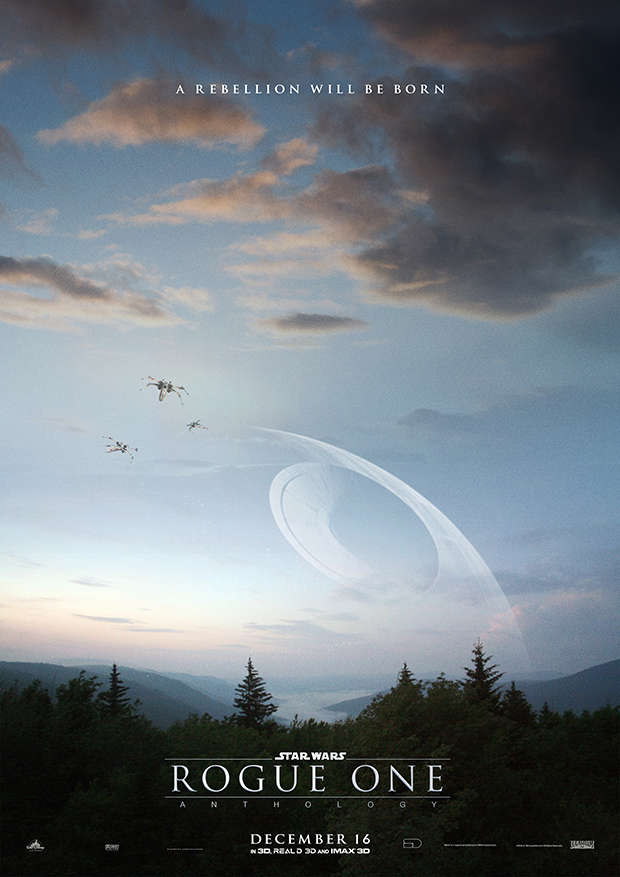
Rogue One

I'm not really a Star Wars fan. I always thought of them as soaps, as family drama in space, a reputation that George Lucas made worse (at least to me) with the prequel trilogy. But somehow I've always managed to catch them in the cinema when a new one comes out. I am a child of capitalism, after all. I watched The Force Awakens when it came out in 2015, and was left underwhelmed by it. It was more of the same, with plot points practically ripped from the pages of A New Hope script.

I still decided to go watch Rogue One when it came out, and by the halfway point I found it not too dissimilar from the previous ones. Another family saga, another abandoned child, Stormtroopers who can't shoot for shit while they get picked off by the protagonists. Yawn.

But then the ending came, and it completely changed my mind! Why? Because almost all of the main characters died, blown to smithereens by the Death Star on that beach planet!

That's honestly very refreshing! For so long we've seen the heroes surviving battles and assaults in the previous movies, and for once they decided to go with a downer ending!

And it's not just a matter of my cynicism being satisfied, I like it because it shows the cost of war and the sacrifices that the grunts, these practically expendable Force-less, non-Jedi grunts, have to make in order to assist the Rebellion. There's no medal presentation ceremony and big smiles at the end, only the grim acceptance that the job was completed at a massive loss of lives.

And no other scene showed this better than the one towards the very end. Darth Vader himself boarded an escaping Rebel ship that was carrying the blueprint of the Death Star, and he mowed down a dozen of officers who could do nothing but hope that the time he would take to hack all of them down to death would be just long enough for the data to be smuggled to safety.

It was a brilliant effort by English director Gareth Edwards, who last directed Godzilla (2014), which I enjoyed immensely, although the receptions to it were split down the middle.

It also scored bonus points with me as it achieved one other thing; explain a major plot hole in A New Hope. How could a major weapon of mass destruction, the crown jewel of the Empire, be designed in such a way that a critical flaw can be accessed externally? As it turned out, the flaw was included by its reluctant chief engineer, the father of the movie's protagonist. Brilliant.


La La Land

I've been wanting to watch this musical ever since the first time I heard that catchy song in its trailer. It also stars my favourite actor and actress, Ryan Gosling and Emma Stone as two star-crossed lovers.

But boy was I in for a surprise. I had expected something of a more conventional, costume-and-choreography, song-and-dance Broadway-style musical. I was let down as early as the first song, despite it being perhaps the most conventional number in the musical.

First of all, it's the music that turned me off. Gosling's character is a jazz musician, and almost all of the tunes are jazz ones. And while most stage musicals, and those adapted to the screen, are set in exotic historical settings, La La Land is set in the present time (I had thought it was set in the 1950's or 60's Hollywood from the trailer).

I suppose this is a more of a European/French-style musical? Think Umbrellas of Cherbourg (1964), which I actually haven't seen at all.

Honestly, I would have left the cinema halfway through, if not for the fact that I was there with a girlfriend, and she was leaning against my shoulder asleep. And Gosling and Stone's singing, they have not been classically-trained which I expected from actors in movie musicals.

But just like Rogue One, La La Land's ending turned my opinion on its head. Simply put, the two lovers do not end up together, which is shown in a bittersweet revelation. I respect that commitment to showing what is most likely to happen in real life, that there is no happy ending, even when there are two or three scenes preceding the ending that tease the audience into believing that they both will end up together again.

And when the movie ended, it turned out that the two songs I heard in the trailer were literally the only songs I like from the whole movie. Cheeky bastards.

My VERDICT: Rogue One gets a 7.5 from me, while La La Land has landed itself a 7/10 rating.

On an unrelated note, I should really look into talking to a therapist.

Reading is bad - A Captain America: Civil War review


I've mentioned before that as a normal, male movie-watcher, I can't help but be sucked in by all the superhero movies. Sure, I've also been watching normal, non-superhero movies, but they're not worth writing about here. I haven't been writing about superhero movies either, because for the most part share the opinions most people have about the; that they are enjoyable movies with surprisingly tight plot (at least Marvel Studios ones. Dawn of Justice? Eeesshh.)

Until Captain America: Civil War.

A bit of background is due. I didn't grow up with superhero comic books, and even when I had the means, I mostly read DC Comics. The only Marvel comics I read was the Civil War titles, and it was because they were arranged so it was easy for casual readers like me to follow the story.

Up until Captain America: Civil War, I had enjoyed all of Marvel Studios movies, and I think the previous two Cap movies were among the most brilliant movies by the company.

Even after two viewings, I was left feeling unsatisfied by Civil War, and they were mainly caused by the fact that I could not stop comparing the movie with the source material, among the few Marvel comics that I've read.

One of my biggest gripes towards the movie is the reason behind the clash between Cap and Iron Man. In the comics the reason is the Superhero Registration Act, following an incident involving minor-level costumes that caused an explosion near a school that killed a lot of children, which Captain America could not bring himself to accept. So it was a battle of principals, between the freedom-loving one-time poster boy of Uncle Sam, and Tony Stark, who is essentially a businessman who knows when to cut his losses and play ball with the government.

But in the movie, it is essentially about Cap's brainwashed former bestfriend-turned frenemy Winter Soldier, and whether he is guilty for countless murders. Yes there is the Sokovia Agreement, but it only plays a part for around half an hour, and the conflict in the movie hinges more on whether Cap is going to go with Winter Soldier or Iron Man, like little kids at the playground. And in the end, after the big revelation that buries dead Stark's chance of ever accepting Bucky as a troubled man, when Cap reveals that he has known all along what the Winter Soldier did and hides it from Stark's knowledge, Cap gives a cop-out explanation; "I thought I did it to protect you, but it was actually to protect me," or some such. Really weak there. 

Furthermore, the reveal of the mastermind behind the whole schism, and the reason for doing it, feels really off. I mean this character is a pretty iconic character in the comics, but they've turned it lame.

My second complaint is that the movie feels small. In the comics the story arc involves almost all characters and titles owned by the company, so it is massive.

The movie only had Iron Man, Cap, Black Widow, Spidey, Ant-Man, Falcon, Winter Soldier, Hawkeye, War Machine, Black Panther and Vision. Sure it was a massive achievement getting all these characters and (stars) to be in the movie, but it still felt lacking, knowing that they purposely leave out Thor and Hulk, who supposedly are in the third Thor movie, and knowing that there are more characters on the tv side of Marvel Cinematics Universe that have been left unused. Guys like Daredevil, Jessica Jones, Punisher, SHIELD guys. I have a feeling that they had to rush Spider-Man and Black Panther in because the roster felt a little small.

In fact I've had this reservation ever since the movie was first announced, finding it weird that it was going to be filmed as a Captain America title, instead of an Avengers one, as it involved almost all MCU characters. I have a feeling that this would be better as an Avengers title further down the line, when they have introduced more characters such as Luke Cage, Iron Fist, Doctor Strange and Captain Marvel, and only after they are done with Avengers: Infinity War. If one movie is too cramped to star all these guys, then make it a two-parter, like what they are planning to do with IW.

My next point is one of the criticisms many people have towards MCU movies; that the ending bears very few consequences. The comics end with many characters dying, on both sides of the divide, including one major character, but the movie's ending feels like all that has happened earlier, all the heartaches, all the betrayals, are simply swept under the carpet. Sure, as a business you can't afford to kill off your bankable characters (funnily enough, this doesn't apply to Game of Thrones) but there are still places you can go to without offing your hero.

I have a few other complaints about the movie, the first MCU movie that left me feeling disappointed, but the above are the ones that concern me having already read the source material. Sometimes I wonder if I would have enjoyed it more if I haven't read the comics first.

The GOOD: SpiderMan steals the show, and I really enjoy the fact that he is played by someone who actually looks like a teenager for a change.

The BAD: The mastermind has been normalled-down as compared to his original comics counterpart.

My VERDICT: 6.5/10. It's still enjoyable, but after the very strong and intriguing Cap 1 and 2, it seems like when it comes to superhero movies, the third outing will almost always fail to reach the previous heights. Case in point, The Dark Knight Rises, Sam Raimi's Spiderman 3, X-Men 3 and the recently-released X-Men: Apocalypse.

TRIVIA: In the comics, the Superhero Registration Act would require all costumed superheroes to register their secret identity with the government, but that would not work in the movies as most of their identities are already publicly known, or at least known by the government.